Best Intermediate Golf Clubs: Reviews, Buying Guides, and FAQs 2026
by Bill Winters
You've broken 90 a handful of times, your swing is getting more consistent, and you know the difference between a draw and a fade. But you're still playing with the same starter set you bought three years ago — and you can feel it costing you strokes. That's exactly the moment to upgrade to intermediate golf clubs built for your current skill level, not the one you had when you first picked up the game.
Intermediate golfers sit in a specific sweet spot. You don't need the extreme game-improvement forgiveness of a beginner set, but you're not ready to sacrifice distance and launch for the workability of a players' iron. The clubs on this list are engineered for golfers who shoot in the low 80s to mid-90s and want equipment that rewards improving ball-striking while still covering mistakes on off-center hits. If you've been browsing our full club reviews section, you already know how crowded this category is — so we've done the heavy lifting and narrowed it to the seven best options for 2026.

Whether you're building a full bag from scratch or upgrading just your iron set, this guide covers complete sets and individual iron lineups that deliver real performance gains. We've looked at face technology, shaft options, forgiveness profiles, and overall value. If you want to dig deeper into shaft selection before you buy, check out our guide on which flex is right for your golf clubs — getting that wrong can undo everything else. Below, you'll find detailed reviews, a buying guide, and answers to the most common questions intermediate players ask in 2026.
Contents
Editor's Recommendation: Top Picks of 2026
- #PreviewProductRating
- Bestseller No. 1
 Rating:

- Bestseller No. 2
 Rating:
 - Bestseller No. 3
 Rating:
 - Bestseller No. 4
 Rating:
 - Bestseller No. 5
 Rating:
 - Bestseller No. 6
 Rating:
 - Bestseller No. 7
 Rating:

Our Hands-On Reviews
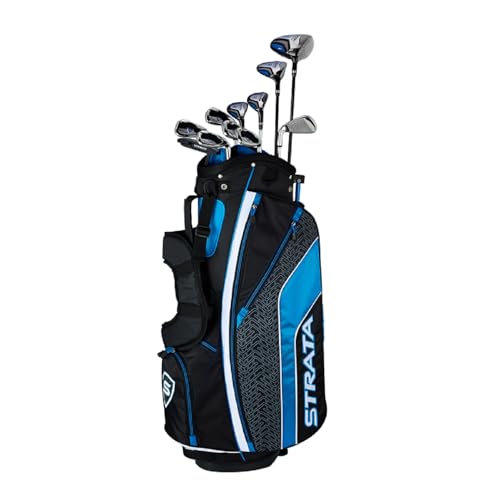
1. Strata 2019 Strata Ultimate 16-Piece Complete Set — Best Complete Bag Value for Intermediate Golfers
If you're rebuilding your entire bag and want a single purchase that covers everything from driver to putter, the Strata Ultimate 16-Piece Set delivers remarkable completeness at its price point. You get a full complement of clubs — driver, 3-wood, 4 and 5 hybrids, irons 6 through 9, pitching wedge, sand wedge, putter, a stand bag, and four headcovers. That's a bag that's actually ready to play the moment it arrives.
The driver and fairway wood use a modern low-profile design that helps launch the ball high without requiring a perfect strike. The hybrid replacements for long irons are a smart choice for the intermediate player — they're significantly easier to hit than a 4 or 5 iron out of most lies. The irons feel solid through impact, and while they won't match a premium forged blade for feedback, they offer enough distance consistency to build real improvement around. The putter is basic but functional, and the included stand bag is lightweight and well-organized with enough pockets for a full round's worth of gear.
This set isn't going to turn heads at a tour event, but that's not the point. For an intermediate golfer who wants a dependable, complete upgrade from a hand-me-down starter set without paying for clubs they're not yet ready to use, this Strata package makes a strong case. It's the kind of kit that lets you focus on developing your game rather than worrying about your equipment.
Pros:
- Complete 16-piece setup means no additional purchases needed
- Hybrids replace difficult-to-hit long irons — smart for the intermediate level
- Lightweight stand bag with headcovers included
- Strong value-to-completeness ratio
- Easy-launch driver and fairway wood for consistent distance off the tee
Cons:
- Iron feedback is limited compared to premium sets — you'll feel less distinction between good and great strikes
- Putter is functional but basic; many players upgrade it within a season
- Less customization than buying individual clubs

2. TaylorMade Golf RBZ Speedlite 2 Complete Set — Best Premium Complete Set
TaylorMade's RBZ line has always been about speed and distance, and the RBZ Speedlite 2 elevates that legacy with advanced technologies borrowed from the brand's premium Tour lineups. This 11-piece steel-shaft set is built specifically for players who want effortless launch, meaningful distance gains, and maximum forgiveness — all in a cohesive, properly matched package. Right hand, regular flex, steel shaft makes this the ideal spec for most male intermediate golfers.
The driver and fairway metals in this set use aerodynamic shaping that reduces drag through the swing for faster clubhead speed. The irons feature a low and deep CG placement that gets the ball airborne quickly even on mishits. TaylorMade's engineering on this set is noticeably more refined than budget complete packages — you can feel the difference in the crispness of ball contact and the consistency of the distance gaps between clubs. The set is genuinely designed for golfers of all levels transitioning through the intermediate stage, not just marketed that way.
If you're comparing this against the Strata above, the RBZ Speedlite 2 costs more but gives you TaylorMade's actual tech stack rather than a stripped-down version. For a player who's committed to improving and wants gear that won't hold them back as their game develops over the next few seasons, this is the better long-term investment.
Pros:
- Genuine TaylorMade technology — not a watered-down budget build
- Effortless launch even on off-center hits
- Steel shaft for consistent feedback and control
- Cohesive 11-piece set with properly gapped distances
- Impressive distance gains across all clubs in the bag
Cons:
- Higher price point than entry-level complete sets
- 11 pieces means you may still need to add a wedge depending on your course conditions
3. Cobra Aerojet Iron Combo Set — Best for Distance-Focused Mid-Handicappers
Cobra's Aerojet Iron Combo Set is an iron-only purchase aimed at golfers who want to upgrade their existing bag with a set that punches well above its weight in ball speed and distance. The three headline technologies here all work together toward one goal: get the ball moving faster across more of the face, so your off-center hits still go the distance your pure strikes do.
The PWR-BRIDGE weighting system uses a suspended bridge design that lets the face and sole flex more freely at impact, repositioning the CG low and forward for a penetrating ball flight with more speed. The PWRSHELL face insert is a forged design that covers a larger portion of the face than conventional inserts, so you're getting high launch and fast speed even when you catch it slightly thin or toward the toe. Cobra's H.O.T Face technology adds an AI-designed variable thickness pattern across the face — the outer edges are thinner to compensate for natural speed loss, effectively making your mishits perform closer to your center hits.
As a combo set, the Aerojet pairs hollow-body long irons with more traditional short irons, giving you the best tool for each situation rather than a one-design-fits-all compromise. If you've been frustrated by your long iron distances not matching what the shaft and loft should produce, this set directly addresses that problem. Pair these with a proper understanding of which wedges complement your short game and you'll have a lethal approach game.
Pros:
- Three distinct speed-enhancement technologies stacked together
- PWRSHELL forged face delivers exceptional ball speed on mishits
- Combo design optimizes each club for its role in the bag
- Low and forward CG produces high launch with penetrating flight
- H.O.T Face AI technology makes distance more consistent across the face
Cons:
- Iron-only set — you're building around existing woods and wedges
- Strong lofts mean your distances may run longer than expected; gapping check recommended
4. TaylorMade Golf SIM2 Max Iron Set — Best for Maximum Forgiveness
The TaylorMade SIM2 Max irons represent one of the most forgiving iron sets TaylorMade has ever produced, and that forgiveness is delivered without the clunky, overbuilt look that often accompanies game-improvement designs. This right-hand, steel, regular-flex set runs 5-PW and AW — seven clubs that cover the core iron distances where most intermediate golfers lose strokes.
The Cap Back Design is the engineering story here. TaylorMade combines high-strength stainless steel in the face and upper structure with ultralight polymer in the rear, which frees up mass to push the CG lower than a conventional iron. Lower CG equals higher launch with less effort, and in the context of an intermediate player whose tempo and contact consistency are still developing, that's a direct score benefit. The Fast Forgiving face amplifies the effect — it's designed to maintain ball speed across a wider portion of the face, so you're not punished as severely for strikes near the edge.
The ECHO Damping System is what separates these irons from feeling like a game-improvement tool. The softer polymer blend with multiple contact points across the face filters out the harsh vibration you associate with hollow-body irons and replaces it with something closer to forged feel. You get the forgiveness of a cavity-back without sacrificing the sensory feedback that tells you how well you hit it. For a player in the middle of their improvement arc, that feedback loop is genuinely valuable.
Pros:
- Cap Back multi-material design maximizes CG lowering for effortless high launch
- ECHO Damping System provides forged-iron feel despite game-improvement construction
- Fast Forgiving face maintains ball speed on off-center hits
- 7-club set covers 5-PW plus AW — solid scoring range
- Clean, non-clunky look that won't embarrass you as your ball-striking improves
Cons:
- Strong lofts throughout — factor this into your distance gapping when comparing
- Intermediate players who are already consistent ball-strikers may outgrow the forgiveness profile sooner than expected
5. Mizuno JPX925 Hot Metal Irons — Best for Premium Feel with Game-Improvement Forgiveness
Mizuno has a reputation for producing irons with exceptional feel, and the JPX925 Hot Metal carries that tradition into a forgiving package that intermediate golfers can actually use. This 7-piece set runs 5 through GW in right-hand steel regular flex. The name is accurate: these irons are engineered specifically for fast, hot ball speed combined with the consistency you need when your ball-striking is still developing.
The CORTECH face design is Mizuno's system for optimizing face thickness distribution to maximize the COR area — the zone where the face springs back at impact to add speed to the ball. A larger COR area means more of the face produces near-peak ball speed, which directly translates to more consistent distances across your iron set. The Seamless Cup Face takes this further by thinning the face around the entire 360-degree perimeter, increasing the rebound area at the edges where off-center hits occur most frequently.
Variable Sole Thickness adds an additional layer of face flex across the full face area, pushing COR numbers higher throughout. What you end up with is an iron that delivers distance numbers you'd expect from a stronger-lofted club, with the feel quality that Mizuno is known for. If you've been told you've outgrown your beginner irons but you're not ready to move into a players' iron that requires a laser-perfect strike to work — the JPX925 Hot Metal is exactly the bridge you're looking for. Check out our guide on the best men's golf clubs for intermediate golfers for more options in this category.
Pros:
- CORTECH design maximizes the COR area for consistent ball speed
- Seamless Cup Face adds speed at the perimeter where mishits land
- Variable Sole Thickness increases overall face flex for added distance
- Mizuno's signature feel quality — meaningful feedback without harshness
- 7-club set 5-GW covers all core scoring distances
Cons:
- Premium Mizuno pricing — this is an investment, not a budget purchase
- Hot metal construction prioritizes distance over the workability that advanced players eventually want
6. Callaway DARKSPEED Iron Set — Best for Raw Ball Speed
Callaway's DARKSPEED Iron Set makes no apology for what it prioritizes: ball speed, distance, and accuracy — in that order. The design language is aggressive and the name is earned. These irons are built for intermediate players who want to see bigger numbers on their approach shots and are tired of leaving distance on the table with their current setup.
Powerful ball speed is the primary engineering goal with the DARKSPEED, and Callaway achieves it through a combination of face design and internal weighting that would have required a much more expensive iron just a few years ago. The Tuned Acoustics system means that while these irons are built for max performance, they don't sound or feel like hollow metallic boxes at impact — the engineers specifically worked on filtering the feedback to give you a satisfying response even on your best strikes. Extreme accuracy rounding out the three headline features speaks to the stability of the head through the impact zone, which translates to tighter shot patterns.
If you're the type of intermediate golfer whose ball speed tends to vary shot to shot and you want an iron that smooths out those inconsistencies and delivers predictable, repeatable distance — the DARKSPEED belongs on your shortlist. It pairs well with a structured practice routine focused on perfecting your setup and stance, which will help you take full advantage of what the face technology offers.
Pros:
- Engineered specifically around maximum ball speed
- Tuned Acoustics system delivers satisfying feel, not a hollow clank
- Extreme accuracy profile keeps shot dispersion tight
- Callaway's build quality and consistency at a competitive price
Cons:
- Feature descriptions are lighter on technical detail compared to competitors — you're trusting the Callaway brand engineering here
- Aggressive distance focus means less workability if you want to shape shots intentionally
7. Cleveland Launcher XL Halo Iron Set — Best Hybrid-Iron Design for Effortless Launch
Cleveland's Launcher XL Halo Iron Set takes a fundamentally different approach than any other iron on this list. Rather than building a traditional iron with game-improvement tweaks, Cleveland designed the entire set around an XL head size that produces the highest MOI ever recorded in a Cleveland Golf hybrid-iron. The 7-iron measures 2,908 g-cm² in MOI — a number that means severe resistance to twisting at impact and, for you, much more consistent distance even when you don't catch it on the sweet spot.
This graphite-shaft, regular-flex, right-hand set runs from 5 through DW, covering your full iron and wedge range in one purchase. The Rail to V-Shaped Sole Design is an intelligent engineering choice that adapts the sole shape to what each iron needs: Gliderail in the longer irons for turf interaction and forgiveness, transitioning to a V-Shaped sole in the short irons for cleaner turf interaction on tighter lies, and a 3-Tiered Sole on the wedges for versatility from different lies and conditions.
The MainFrame variable face technology uses Artificial Intelligence to design the internal rib pattern — similar to what Callaway uses in their B21 and Rogue lines. The result is higher ball speed across more of the face, combined with unique weight pad designs that maximize forgiveness where the face needs it most. According to golf equipment design principles, high-MOI designs significantly reduce the performance penalty on off-center hits, which is precisely what makes the Launcher XL Halo so well-suited for intermediate players. If you struggle with distance consistency on your long irons in particular, this set delivers maximum help.
Pros:
- 2,908 g-cm² MOI in the 7-iron — highest ever in a Cleveland hybrid-iron
- Rail-to-V-Sole design optimizes each iron for its specific turf interaction role
- AI-designed MainFrame variable face for speed and forgiveness across the entire face
- Full set 5-DW including wedges — complete iron coverage in one purchase
- Graphite shaft reduces fatigue over a full 18 holes
Cons:
- XL head size may not appeal to players who prefer a more traditional, compact iron look at address
- Graphite shaft provides less feedback than steel — a trade-off for some intermediate players
- The high-forgiveness profile means less feel differentiation between good and great strikes
Key Features to Consider When Choosing Intermediate Golf Clubs
Forgiveness vs. Workability: Where Are You Right Now?
This is the central tension in every intermediate iron purchase. Forgiveness means the club corrects your mistakes — high-MOI designs, hollow bodies, and wide soles all push the ball toward the target even when you don't hit it perfectly. Workability means you can intentionally shape shots, controlling trajectory and curve. Players' irons give you workability. Game-improvement irons give you forgiveness.
Here's the honest truth: if you're shooting in the mid-80s to mid-90s, you need forgiveness more than workability. The shot-shaping conversation is premature when most of your strokes are being lost to inconsistent contact, not a lack of curve control. The clubs on this list all lean toward the forgiveness end of the spectrum by design — that's appropriate for this skill level, and it's the right call for improving your scores in 2026.
- High forgiveness: Cleveland Launcher XL Halo, TaylorMade SIM2 Max
- Balanced forgiveness + feel: Mizuno JPX925 Hot Metal, Cobra Aerojet
- Speed + forgiveness combination: Callaway DARKSPEED, TaylorMade RBZ Speedlite 2
Steel vs. Graphite Shafts
Shaft material is a bigger decision than most intermediate golfers realize. Steel shafts provide more consistent feedback — you feel exactly where on the face you made contact, which helps you learn faster. They're also heavier, which suits players with faster swing speeds or who prefer more control over trajectory. Graphite shafts are lighter, reduce vibration, and can add clubhead speed for players with slower tempos. They also reduce fatigue over a full round, which matters more than most people admit on holes 14 through 18.
Most intermediate male golfers with swing speeds above 85 mph play better with steel. If you're below that threshold, or if you're returning to golf after a break and your swing speed has dropped, graphite deserves serious consideration. The Cleveland Launcher XL Halo in our list uses graphite specifically — it's designed for players who want maximum launch assistance.
- Choose steel: if your swing speed is above 85 mph and you want feedback-driven improvement
- Choose graphite: if you want reduced fatigue, faster swing speed from lighter weight, or you're dealing with joint discomfort
Complete Set vs. Individual Iron Set
The choice between a complete bag and an iron-only upgrade depends on what's actually holding you back. If your woods and hybrids are already performing well, buying a new iron set like the Mizuno JPX925 or Cobra Aerojet makes more sense — you upgrade the weakest link. If your entire bag is outdated or mismatched, a complete set like the Strata Ultimate or TaylorMade RBZ Speedlite 2 gives you a properly matched system where every club is engineered to work together.
Matched sets have an underrated advantage: the loft gapping and shaft profiles are coordinated so your distance gaps between clubs are consistent. When you assemble a bag from individual clubs bought at different times, gaps and overlaps in distance are common and create decisions on the course you shouldn't have to make. Consistency in distance gapping is a real scoring advantage that most amateur golfers overlook.
Loft and Distance Gapping in Modern Irons
Modern game-improvement irons have significantly stronger lofts than irons from ten or fifteen years ago. A 7-iron today might be lofted at 30 degrees where it used to be 34-36 degrees. That means the distance numbers you hit your old 7-iron won't match your expectations when you pick up a new set. The club goes farther, but the club labeled 7 covers distances that used to require a 6-iron.
This matters for your short game. If your pitching wedge is lofted at 42-44 degrees, you need a gap wedge at 48 and a sand wedge at 54-56 to have proper distance coverage into the green. Before you buy, check the loft specs and make sure your wedge setup matches. Our golf wedge buyer's guide walks you through exactly how to build a complementary short game setup.
- Check the PW loft on any iron set you buy
- Build upward from there: gap wedge at +4 to +6 degrees, sand wedge at +8 to +12 degrees
- Many complete sets include a sand wedge — verify the loft before assuming coverage
Questions Answered
What makes a golf club "intermediate" vs. a beginner or advanced club?
Intermediate clubs sit between maximum game-improvement and tour-level players' designs. They still offer meaningful forgiveness through cavity backs, hollow bodies, and high-MOI head designs, but they also provide more distance control and feedback than pure beginner sets. They're designed for players who make consistent contact most of the time but still need help on mishits. Think of them as clubs that reward improving ball-striking without punishing you for the strikes that aren't perfect yet.
How do I know if I'm actually an intermediate golfer?
A useful benchmark: if you're consistently shooting between 80 and 100, understand basic shot shape terminology, and can get around a course without losing a ball on every other hole, you're in intermediate territory. A handicap between 10 and 20 also places you squarely in this category. The key marker is consistency — not perfect contact, but contact that's reliable enough that your equipment's forgiveness profile actually matters to your score.
Should I get fitted for intermediate clubs, or can I buy off the shelf?
Getting fitted is always better if the budget allows. A proper fitting checks your swing speed, attack angle, and tempo to recommend shaft flex, lie angle, and club length. Lie angle alone can send your shots 10-15 yards offline if it's wrong for your swing. That said, standard specs — regular flex, standard length, standard lie — fit a large percentage of average-height male intermediate golfers reasonably well. If you're outside average height (under 5'7" or over 6'2"), a fitting becomes more important, not optional.
How long will a set of intermediate golf clubs last before I need to upgrade again?
A quality iron set at this level should serve you for three to five years of regular play, assuming you're not putting in 36 holes a week. The face technology in modern irons is durable, and face fatigue on forged faces — where the spring effect degrades over time — is more of a concern for tour players hitting thousands of balls than for recreational golfers. When your handicap drops below 10 and you're starting to feel like the forgiveness is working against your ability to shape shots intentionally, that's your signal to consider moving toward a more workable iron.
Is a complete set or individual iron set better for an intermediate golfer?
It depends on where the gaps are in your current bag. If you already have quality woods, hybrids, and wedges, an iron-only upgrade (Cobra Aerojet, Mizuno JPX925, TaylorMade SIM2 Max) gives you the most focused improvement per dollar spent. If you're rebuilding from scratch or your entire bag is outdated, a complete set gives you a coordinated system with matched loft gapping and consistent shaft profiles throughout. Complete sets are also harder to beat for total cost — buying clubs individually always costs more than buying a bundled package.
What shaft flex should an intermediate golfer use in 2026?
Regular flex is the right call for most intermediate male golfers with swing speeds between 75 and 95 mph. If you're consistently above 95 mph, stiff flex will give you better trajectory control and prevent the shaft from releasing too early. Below 75 mph, senior or ladies flex will help you maximize launch. When in doubt, choose regular — it's the most forgiving flex choice for inconsistent swing tempos, which describes most players in the intermediate range. For a full breakdown, our guide on which flex is right for your golf clubs covers every speed range in detail.
Buy on Walmart
- Strata 2019 Strata Ultimate 16-Piece Complete Set — Walmart Link
- TaylorMade Golf RBZ Speedlite 2 Complete Set 11 PC Steel Sha — Walmart Link
- Aerojet Iron Combo Set — Walmart Link
- TaylorMade Golf SIM 2 MAX IRON SET MENS RIGHT HAND STEEL REG — Walmart Link
- Mizuno JPX925 Hot Metal Irons | 7 pc 5-GW Iron Set | RH/Stee — Walmart Link
- DARKSPEED Iron Set — Walmart Link
- Cleveland Launcher XL Halo Iron Set RH 5-DW Graph Reg — Walmart Link
Buy on eBay
- Strata 2019 Strata Ultimate 16-Piece Complete Set — eBay Link
- TaylorMade Golf RBZ Speedlite 2 Complete Set 11 PC Steel Sha — eBay Link
- Aerojet Iron Combo Set — eBay Link
- TaylorMade Golf SIM 2 MAX IRON SET MENS RIGHT HAND STEEL REG — eBay Link
- Mizuno JPX925 Hot Metal Irons | 7 pc 5-GW Iron Set | RH/Stee — eBay Link
- DARKSPEED Iron Set — eBay Link
- Cleveland Launcher XL Halo Iron Set RH 5-DW Graph Reg — eBay Link
The best intermediate golf clubs aren't the most expensive ones — they're the ones engineered to match where your game actually is today, not where you hope it'll be in five years.



About Bill Winters
Those who have not yet tried the sport just can’t imagine what is driving these golfers to brave the sun’s heat and go around a course bigger than several football fields combined. It seems like an awful lot of work considering that the ball is quite small that is must be hard to hit, the ground of the course is not flat and, most annoying of all, there are sand traps lying around seemingly bent on preventing a player from finishing the course.
Follow & Subscribe for more:


About the Author

The game of golf may seem like an awful lot to take on when one considers that the ball is quite small, must be hard to hit and carry through windy conditions with little chance for error. The ground course has hillsides which make it challenging enough without adding sand traps who seem bent on preventing players from completing their round!
Get the FREE Gifts now. Or receive the latest golf eBooks for free from our bestselling.
Disable Ad Block to reveal all the secrets. Once done, hit a below button: