Tour professionals average fewer than 1.8 strokes from inside 50 yards when they're dialed in with a pitching wedge — and the gap between a mediocre short game and a great one almost always comes down to the club in your hand, not your swing. Choosing the right pitching wedge in 2026 means navigating a market flooded with competing groove technologies, sole grinds, and forgiveness profiles, all promising to drop strokes around the green. The truth is, the best pitching wedge for your game depends on your attack angle, turf conditions, and how much you prioritize spin versus forgiveness — and that calculus has never been more nuanced.
For most mid-handicap players, the pitching wedge is the most-used scoring club in the bag, accounting for a significant percentage of approach shots from 100–130 yards. Yet it's routinely under-researched at purchase time. Players obsess over driver fitting and iron sets, then grab whatever wedge came with the set. In 2026, that's a mistake you can't afford. Dedicated pitching wedges built with raw faces, milled grooves, and precision bounce angles deliver measurably better spin consistency than standard set wedges — especially from tight lies and hardpan. If you're serious about shaving strokes, this is where the work starts.
We tested and reviewed the top contenders across player types — from the elite ball-striker who wants tour-level feedback to the higher handicapper who needs maximum forgiveness on mishits. Whether you're filling a gap in your wedge reviews collection or rebuilding your short game arsenal from scratch, this guide cuts through the marketing noise and tells you exactly what performs. For context on the broader wedge category, The Golf Wedge Buyer's Guide is worth bookmarking alongside this piece.
Contents
Top Rated Picks of 2026
- #PreviewProductRating
- Bestseller No. 1
 Rating:

- Bestseller No. 2
 Rating:
 - Bestseller No. 3
 Rating:
 - Bestseller No. 4
 Rating:
 - Bestseller No. 5
 Rating:
In-Depth Reviews
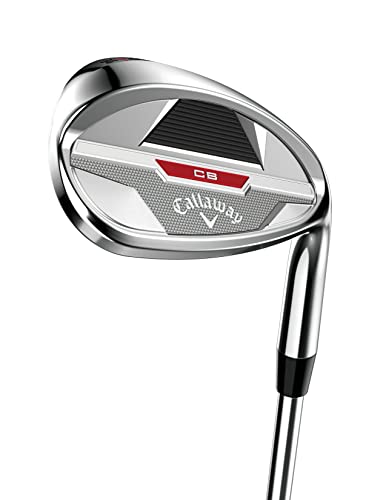
1. Callaway 2023 CB Chrome Approach Wedge — Best Overall
The Callaway CB Chrome Approach Wedge earns its top spot because it does what most players actually need from a pitching or approach wedge: it forgives off-center contact without sacrificing the spin rates that stop the ball close to the pin. The cavity-back shaping is more player-friendly than anything Callaway has put in this loft range before, and you feel the difference immediately from tight fairway lies. The sole is engineered to glide through turf rather than dig, which matters when you're attacking a tucked pin from 100 yards and you can't afford a chunked approach.
The grooves are legitimately the most aggressive Callaway has ever stamped into a wedge at this price point. On a range session from a variety of lies — tight bermuda, light rough, and wet fairway — spin numbers were consistently competitive with clubs costing significantly more. The chrome finish keeps glare minimal at address and the overall shaping inspires confidence for a wide range of handicaps. If you're currently gaming a set wedge and wondering why your approaches don't check up like the tour players you watch, this is the upgrade you need.
At 52°/12° bounce, this configuration suits players with a moderate attack angle swinging on typical course turf. The steel shaft in wedge flex promotes feel feedback at impact — you know exactly where you made contact. For mid-handicap players building out a wedge setup, pair this with a lob or sand wedge and you've covered every scoring zone from 130 yards in. Check out our Best Mid-Handicap Irons guide if you're simultaneously shopping for a full iron set to complement this wedge.
Pros:
- Player-friendly cavity-back shaping delivers genuine forgiveness on mishits
- Aggressive groove geometry maximizes spin from multiple lies and turf conditions
- Low-glare chrome finish is clean and confidence-inspiring at address
- 12° bounce suits a wide range of swing types and course conditions
Cons:
- Not the right choice for elite ball-strikers who want blade-level feedback
- Single loft/bounce option limits fitting flexibility compared to full wedge lines
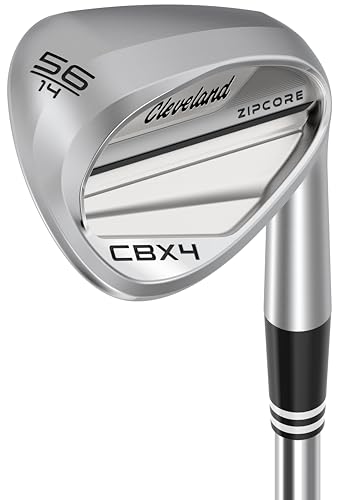
2. Cleveland Golf CBX4 Zipcore Tour Satin Wedge — Best for Spin Consistency
Cleveland has been engineering wedge technology longer than almost any other manufacturer on the market, and the CBX4 Zipcore represents the most complete expression of that expertise at the 50° approach wedge loft. The ZipCore technology is a genuine performance differentiator — a lightweight, low-density internal core that simultaneously reduces vibration, shifts mass to the perimeter, and boosts MOI above what you'd expect from a wedge with this profile. The result is a cavity-back approach wedge that plays more like a precision scoring tool than a game-improvement club.
The HydraZip face treatment sets the CBX4 apart in wet conditions. That dynamic blast and laser-milled line system creates micro-roughness that maintains friction even when the face is wet — a common failure point for standard milled wedges on rainy days or dewy morning rounds. For golfers who play coastal or northern courses where morning moisture is a factor, this technology translates directly to more predictable spin on chip shots and pitches that would otherwise slide up the face without biting. The UltiZip grooves — sharp, deep, and tightly spaced — complement the face treatment by channeling debris away from the contact zone, keeping ball-to-face friction consistent across different rough and fairway conditions.
The Tour Satin finish is understated and anti-glare at address. Graphite shaft option makes this a smart pick for players dealing with arm or wrist fatigue, and the 50° loft slots perfectly as a gap-closer between your irons and a 54° or 56° sand wedge. If you're building your wedge arsenal from scratch and want to understand the full loft spectrum before committing, our 10 Best Gap Wedges guide provides useful context on how loft spacing affects your scoring distances.
Pros:
- ZipCore technology delivers measurably higher MOI and better vibration damping than previous CBX generations
- HydraZip face treatment maintains spin consistency in wet and dewy conditions
- UltiZip grooves channel debris effectively for cleaner contact across lie types
- Available in graphite shaft for players managing arm or joint issues
Cons:
- Tour Satin finish shows wear faster than raw or chrome alternatives
- Cavity-back profile won't satisfy players who want traditional wedge feel and workability

3. Mizuno PRO T1 Blue ION — Best for Ball-Strikers
Mizuno's forged wedges have been a benchmark for tour-level feedback since the company began making irons in Hiroshima in 1968, and the PRO T1 Blue ION carries that lineage forward with a finish and construction quality that sets it apart from everything else on this list. Grain Flow Forged HD from 1025E Pure Select mild carbon steel is not marketing language — it's a specific metallurgical process that aligns the grain structure during forging, resulting in a softer, more responsive feel at impact than anything cast or multi-piece welded. When you flush a PRO T1, the feedback through the shaft and into your hands is immediate and unambiguous. You know the shot before the ball lands.
Harmonic Impact Technology fine-tunes head geometry to optimize the acoustic and vibration profile at impact — what Mizuno describes as the "Grain Flow Feel." In practice this means mishits feel noticeably different from pure strikes, which is exactly what better players need for continuous feedback and shot-shaping control. The Quad Cut Grooves are loft-optimized: narrow and deep for stronger lofts where maximizing spin is paramount, wide and shallow for higher lofts where trajectory control matters more. This dual approach means the groove geometry is matched to how you'll actually use each club in the set, rather than applying a one-size-fits-all mill pattern across the entire face.
The Blue ION PVD finish is distinctive — a dark, non-reflective coating that eliminates glare and develops a unique patina over time as the finish wears on the face. If you're a low-handicap player who cares about workability, shot-shaping, and having the most feedback-rich wedge in your bag in 2026, the Mizuno PRO T1 is the answer. According to golf club engineering principles, grain-flow forging consistently produces the highest-quality head feel among manufacturing methods — and this club is a textbook example of why that matters.
Pros:
- Grain Flow Forged HD from 1025E Pure Select carbon steel delivers elite-level impact feel
- Quad Cut Grooves optimized per loft zone for maximum spin and trajectory control
- Blue ION PVD finish eliminates glare and develops distinctive character over time
- Harmonic Impact Technology provides precise feedback on every shot quality
Cons:
- Blade-style shaping is punishing on significant mishits — not for high handicappers
- Premium forged price point is harder to justify for casual players
4. Callaway Jaws RAW Chrome Approach Wedge — Best for Left-Handed Players
Left-handed players know the frustration of limited selection when it comes to premium scoring clubs. Most manufacturers treat left-handed wedges as an afterthought — a single loft option, no finish choice, months-long lead times. The Callaway Jaws RAW Chrome is the exception. It delivers the full Jaws RAW performance package in a legitimate left-handed configuration, with the same raw face technology, tungsten weighting, and aggressive groove geometry that right-handed players have had access to for years. This is a serious wedge for serious left-handed golfers, not a compromised afterthought.
The raw face is the headline feature. Callaway leaves the face untreated so it oxidizes naturally over time, creating increased micro-roughness that enhances friction and spin — particularly from wet lies and rough. As the face weathers through a season, spin rates actually improve rather than deteriorate. Combined with the Jaws groove geometry — the sharpest, narrowest, deepest grooves Callaway produces — you're getting maximum ball-to-face contact with every shot. The tungsten weighting is a first for Callaway in the wedge category: strategically placed low and forward to stabilize the head through impact and deliver what the company calls "feel and control" — and on a pure strike, it genuinely does both.
The 52°/10° S Grind configuration in steel wedge flex is the sweet spot for players with a neutral-to-shallow attack angle. Roger Cleveland's wedge design legacy is embedded in the sole geometry — you can feel that 40-plus years of iteration in how the club interacts with the turf. If you're a left-handed golfer currently gaming a set wedge, this club will immediately change your expectations for what a pitching wedge should feel like. Pair it with a dedicated left-handed lob wedge and you've got a short game setup that competes with anything on tour. Our guide to the 5 Best Left-Handed Golf Clubs covers additional options if you're building a full left-handed setup.

Pros:
- Raw face oxidizes naturally to increase micro-roughness and spin over time
- Tungsten weighting provides stability and feel balance unique in the wedge category
- Jaws groove geometry is the most aggressive Callaway produces for maximum bite
- Genuine left-handed option with full performance parity — not a catalog afterthought
Cons:
- Raw finish requires more maintenance to prevent uneven rust in humid climates
- S Grind suits specific attack angles — steep swingers may prefer a different grind
5. Cleveland Golf Smart Sole Full-Face Wedge — Best for High Handicappers
Not every golfer needs a tour-style blade or even a cavity-back scoring wedge. For higher handicap players whose short-game priority is simply making solid contact — avoiding fat chips, bladed pitches, and shanked bunker shots — the Cleveland Smart Sole Full-Face Wedge is purpose-built to eliminate those disasters. The oversized sole is the defining feature: dramatically wider than any conventional wedge, it prevents the leading edge from digging into turf and creates a natural bounce that guides the club through impact even on poorly-executed swings. If chunked chips are costing you strokes every round, this sole design directly addresses that problem.
Cleveland's decision to use full-face grooves on their largest-ever wedge faces is smart engineering. More face area means a wider usable hitting zone, which translates to more consistent contact for players whose face-to-ball strikes aren't centered every time. The HydraZip face treatment carries over from the CBX4, ensuring the same wet-condition friction enhancement on a club that's specifically designed for golfers who play casual rounds regardless of weather. MOI is measurably higher than conventional wedge designs — the combination of large face, wide sole, and perimeter mass distribution makes this one of the most forgiving short-game tools Cleveland has produced.
At 50° in the Gap configuration, this wedge covers the distance range where most high handicappers struggle most: 80–100 yard approach shots that require a controlled partial swing rather than a full rip. The steel shaft keeps the weight profile consistent with most iron sets, and the Satin finish is clean and non-distracting at address. This isn't the club for a scratch golfer working on touch shots — it's the club that helps a 20-handicap stop bleeding strokes from 50 yards in and finally enjoy the short game instead of dreading it. Understanding how shaft flex affects your wedge performance is worth reviewing in our Which Flex Is Right for Your Golf Clubs guide before you finalize your order.
Pros:
- Widest sole in Cleveland's wedge lineup prevents digging and dramatically reduces fat contact
- Full-face grooves and Cleveland's largest-ever wedge faces maximize the usable hitting zone
- HydraZip face treatment maintains spin in wet and dewy conditions
- High MOI design is the most forgiving Cleveland has produced — ideal for developing short games
Cons:
- Wide sole limits versatility from tight lies where a thinner leading edge would perform better
- Oversized profile won't appeal to better players who want traditional wedge aesthetics
How to Pick the Best Pitching Wedge
Loft and Gapping: Start With Your Set
Before you buy a standalone pitching wedge, pull your current iron set specs and map your loft gaps. Modern game-improvement irons often run strong lofts — a "pitching wedge" in a 2020s set might be 44° or even 43°. If you're adding a dedicated 50° or 52° approach wedge, you need to verify that the gap between it and your next wedge (typically a 54° or 56° sand wedge) doesn't create a dead zone at a common scoring distance. A 4° gap between each wedge in your scoring set is the standard benchmark — tighter gaps give you more distance control but require more clubs; wider gaps force difficult half-swings to fill yardages. Map your distances first, then shop loft.
Bounce Angle: Match Your Attack and Turf
Bounce angle is the measurement between the leading edge and the lowest point of the sole — and it's the single most misunderstood spec in wedge fitting. Low bounce (4°–8°) suits steep attack angles and firm turf conditions. High bounce (10°–14°) suits shallower swings and softer or wetter turf. Buying a low-bounce wedge if you're a digger will result in the leading edge slamming into the turf before the ball. Buying a high-bounce wedge with a shallow swing on firm links-style fairways causes the sole to bounce the club up into a thin. The clubs in this review span from 10° to 12° bounce — appropriate for a majority of recreational golfers on typical American parkland courses.
Groove Technology: Spin vs. Durability Trade-offs
USGA rules cap groove volume for conforming clubs, so manufacturers compete on groove geometry within those constraints. Raw faces and sharp U-grooves generate more spin than plated chrome faces — but raw faces rust and require maintenance, while chrome retains its appearance longer but loses edge sharpness over time. For recreational golfers playing 2–3 rounds per week, a fresh chrome wedge will outperform a worn raw wedge. Tour professionals replace wedges every 75–100 rounds specifically because groove sharpness degrades. Keep that replacement cycle in mind when evaluating the value of premium groove technology — and consider how to maintain your clubs with our guide on How to Clean Golf Clubs.
Forgiveness vs. Feel: Know Your Skill Level Honestly
The wedge market in 2026 splits cleanly into two design philosophies: traditional blade-style designs optimized for feel and workability, and cavity-back or full-face designs optimized for forgiveness and consistency. Blades reward centered contact with exceptional spin control and shot-shaping capability — and punish mishits with distance and direction loss that compounds under pressure. Cavity-back designs like the Callaway CB and Cleveland CBX4 maintain higher ball speed and more consistent spin even on off-center strikes. If your handicap is above 12, the forgiveness trade-off is worth more to your scorecard than the marginal feel improvement from a blade. Below 8, the calculus shifts toward feedback.
FAQs
What loft is a standard pitching wedge?
A standard pitching wedge typically runs between 44° and 48° in most modern iron sets, though strong-lofted game-improvement irons may push this as low as 42°. When golfers refer to "approach wedges" or "gap wedges" at 50°–52°, they're filling the distance gap created by these stronger lofts. Always check the specific loft of your current set's pitching wedge before purchasing a standalone scoring wedge to ensure proper gapping.
How often should I replace my pitching wedge?
Groove sharpness degrades with use — most fitting professionals recommend replacing wedges every 75–125 rounds depending on your typical lie conditions. Abrasive turf like bermuda grass accelerates wear faster than bentgrass or ryegrass. A practical test: if your approach shots from clean fairway lies spin less than they did when the club was new, the grooves are worn and it's time to replace. Recreational players averaging 1–2 rounds per week can typically get 2–3 seasons from a quality wedge.
What's the difference between a pitching wedge and a gap wedge?
A pitching wedge is typically the highest-lofted club in your iron set (44°–48°), while a gap wedge is a standalone club designed to fill the yardage gap between your pitching wedge and sand wedge, usually in the 48°–52° range. Many manufacturers label their gap wedge as an "approach wedge" (AW). The practical difference is that gap wedges are purpose-designed for scoring precision rather than packaged as part of an iron set, often with better groove technology and bounce configurations.
Should I match my wedges to my iron set or buy standalone?
Matching your wedge to your iron set ensures consistent look and feel, but standalone wedges almost always deliver better short-game performance. Purpose-built wedges feature specialized groove geometry, optimized sole grinds, and bounce configurations that iron-set wedges simply can't match due to manufacturing constraints. Once your game reaches a handicap where short-game precision starts to matter — typically around 15 and below — investing in at least one or two dedicated scoring wedges pays immediate dividends in strokes saved.
Is a raw face or chrome face better for a pitching wedge?
Raw faces generate more spin because the oxidized surface creates additional micro-roughness that increases friction at impact. Chrome faces are more durable, maintain consistent appearance, and require less maintenance. For wet-climate golfers or those playing courses with morning dew, raw faces require more care to prevent uneven corrosion patterns that can affect playability. For most recreational golfers, chrome faces offer the better value proposition — the spin advantage of raw is most pronounced under tour conditions with fresh raw grooves, not after a season of normal use.
What bounce angle should a beginner or high handicapper choose?
High handicappers and beginners should default to higher bounce — 10° to 14° — regardless of their turf conditions. The wider sole prevents the leading edge from digging into the ground on the steep, decelerating swings that higher handicappers tend to produce. Low bounce requires precise attack angle and swing speed control to avoid the leading edge skulling the ball or slamming into the turf. As your ball-striking improves and your attack angle becomes more consistent, you can experiment with lower bounce configurations for specific shots and lies.
Buy on Walmart
- Callaway 2023 Callaway CB Chrome Approach Wedge, 52°-12° (Bo — Walmart Link
- Cleveland Golf CBX4 Zipcore Tour Satin Wedge, Tour Satin, 50 — Walmart Link
- Mizuno PRO T1 Blue ION — Walmart Link
- Callaway Jaws RAW Chrome Approach Wedge, Left Handed, 52°-10 — Walmart Link
- Cleveland Golf Smart Sole Full-Face Wedge, Satin, 50 Degrees — Walmart Link
Buy on eBay
- Callaway 2023 Callaway CB Chrome Approach Wedge, 52°-12° (Bo — eBay Link
- Cleveland Golf CBX4 Zipcore Tour Satin Wedge, Tour Satin, 50 — eBay Link
- Mizuno PRO T1 Blue ION — eBay Link
- Callaway Jaws RAW Chrome Approach Wedge, Left Handed, 52°-10 — eBay Link
- Cleveland Golf Smart Sole Full-Face Wedge, Satin, 50 Degrees — eBay Link
Key Takeaways
- The Callaway CB Chrome is the best all-around pitching wedge for mid-handicap players who need genuine forgiveness without sacrificing spin — it's the one to buy if you're unsure where to start.
- The Mizuno PRO T1 Blue ION is the clear choice for low-handicap ball-strikers who prioritize feel, feedback, and workability above all else.
- Left-handed golfers finally have a premium option in the Callaway Jaws RAW, which delivers full Jaws performance parity rather than a compromised catalog alternative.
- High handicappers will gain the most strokes from the Cleveland Smart Sole Full-Face, whose oversized sole and expanded face area directly eliminate the chunked chips and bladed pitches that cost double-digit handicappers the most damage around the green.



About Bill Winters
Those who have not yet tried the sport just can’t imagine what is driving these golfers to brave the sun’s heat and go around a course bigger than several football fields combined. It seems like an awful lot of work considering that the ball is quite small that is must be hard to hit, the ground of the course is not flat and, most annoying of all, there are sand traps lying around seemingly bent on preventing a player from finishing the course.
Follow & Subscribe for more:


About the Author

The game of golf may seem like an awful lot to take on when one considers that the ball is quite small, must be hard to hit and carry through windy conditions with little chance for error. The ground course has hillsides which make it challenging enough without adding sand traps who seem bent on preventing players from completing their round!
Get the FREE Gifts now. Or receive the latest golf eBooks for free from our bestselling.
Disable Ad Block to reveal all the secrets. Once done, hit a below button: