So how long does 9 holes golf take? For most recreational players, you're looking at roughly 1.5 to 2 hours. That's the quick answer, but the real number depends on your skill level, how busy the course is, and whether you're walking or riding. If you've ever wondered why some rounds fly by while others drag on forever, you're not alone. Understanding the factors that control pace helps you plan your day and actually enjoy your time on the course. Whether you're squeezing in a quick round before work or exploring our golf pace guides, knowing what to expect makes everything smoother.

A 9-hole round is the perfect format for golfers who love the game but don't have four or five hours to burn. It's also a great way for beginners to ease into golf without feeling overwhelmed. Courses across the country are embracing the 9-hole trend because it fits modern schedules. But "about two hours" is just an average — your actual time can swing wildly based on a handful of key variables.
Let's break down exactly what affects your pace, what gear helps you move faster, how much a quick 9 costs, the best situations for playing 9 instead of 18, and a step-by-step approach to shaving time off every round.
Contents
Factors That Control How Long 9 Holes Takes
The difference between a brisk 75-minute round and a painful 2.5-hour slog comes down to three things: who's playing, how crowded the course is, and what kind of course you're on. Understanding these factors means you can pick the right tee time and set realistic expectations.
Your Skill Level
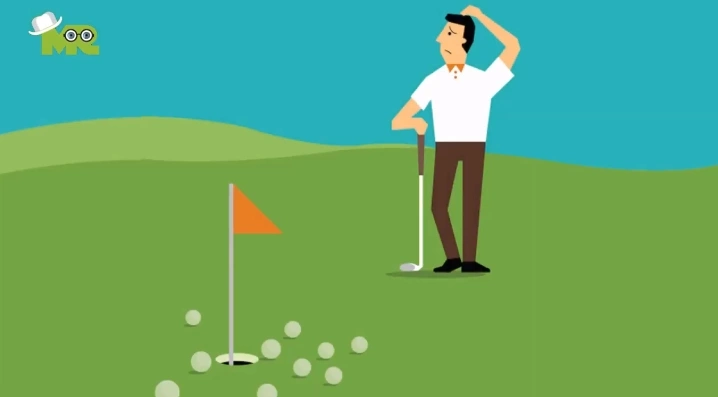
This is the biggest variable, period. A scratch golfer hits fewer shots per hole, spends less time searching for balls, and makes decisions faster. A beginner might take 7 or 8 strokes on a par 4 while an experienced player wraps it up in 4 or 5. Multiply that gap across 9 holes and you're looking at a 30- to 45-minute difference.
It's not just about the number of strokes either. Better players have faster routines. They read greens quicker, commit to club selection without agonizing, and know when to take their medicine after a bad shot instead of attempting a hero recovery through the trees. If you're working on speeding up your game, check out our guide on how to get better at golf — improvement and pace go hand in hand.
Course Traffic and Tee Time Spacing
You can be the fastest player alive and still get stuck behind a foursome that treats every putt like it's the Masters. Course congestion is the factor you control the least. Most courses space tee times 8 to 10 minutes apart, but during peak hours on weekends, the course backs up like highway traffic.

Pro Tip: Book the first tee time of the day. With nobody ahead of you, a twosome can finish 9 holes in under 75 minutes — even at a moderate pace.
Group size matters too. A solo player or twosome naturally moves faster than a foursome. If speed is your priority, play with fewer people during off-peak hours.
Course Layout and Difficulty
A wide-open executive course with short par 3s and par 4s plays much faster than a championship layout with water hazards, deep bunkers, and thick rough. Elevation changes slow you down if you're walking. Blind shots mean more waiting for the group ahead to clear.

Here's a realistic breakdown of how long does 9 holes golf take based on common scenarios:
| Scenario | Group Size | Estimated Time |
|---|---|---|
| Solo, walking, executive course | 1 | 45–60 min |
| Twosome, cart, standard course | 2 | 1 hr 10 min – 1 hr 30 min |
| Threesome, cart, standard course | 3 | 1 hr 20 min – 1 hr 45 min |
| Foursome, cart, standard course | 4 | 1 hr 30 min – 2 hrs |
| Foursome, walking, difficult course | 4 | 2 hrs – 2 hrs 30 min |
| Beginners, any format | 2–4 | 2 hrs – 2 hrs 45 min |
Gear and Tools That Speed Up Your Round
The right equipment won't turn a 3-hour round into a 1-hour round, but it eliminates small time sinks that add up hole after hole. Think of it as removing friction from your process.
Bags, Carts, and Rangefinders
If you're walking, a lightweight stand bag is non-negotiable for 9 holes. Leave the 14-club tour bag at home. Many fast players carry just 7 or 8 clubs for a quick 9 — a driver, a hybrid, a couple of irons, a wedge, and a putter. Fewer clubs means less decision paralysis and a lighter bag on your shoulder. Our breakdown of how many clubs in a golf bag explains the rules and strategy behind club selection.
A laser rangefinder or GPS watch cuts 15 to 30 seconds per approach shot. Instead of pacing off yardage or hunting for a sprinkler head marker, you zap the flag and pick your club. Over 9 holes, that's 3 to 5 minutes saved without rushing a single shot.
Cart riders should keep their bag organized so they're not digging around for tees and balls between shots. A simple magnetic ball marker on your hat and a couple of tees tucked behind your ear keep you moving.
Apps and GPS Devices
Golf GPS apps on your phone or smartwatch give you instant distances to hazards, front/middle/back of the green, and even suggest club selection based on your history. This eliminates guesswork and keeps you walking toward your ball instead of standing around calculating.
Score-tracking apps also help because you can log your score while walking to the next tee instead of stopping to write on a paper card. Digital scoring is faster and you get stats afterward to track your improvement.
Quick Warning: Don't let technology slow you down. If you're spending more time checking your phone than playing golf, leave the app in your pocket and just play.
What 9 Holes of Golf Actually Costs
One of the best arguments for playing 9 holes instead of 18 is the price. You get your golf fix for roughly half the cost, sometimes even less. Here's what you should budget for a typical 9-hole outing.
Greens Fees Breakdown
Prices vary wildly depending on location, course quality, and time of day. A municipal course in a smaller city might charge $12 to $18 for 9 holes. A nicer semi-private course near a metro area runs $25 to $45. Twilight rates (typically after 3 or 4 PM) often knock 30 to 50 percent off the regular price.
Walking is almost always cheaper than riding. Cart fees for 9 holes usually add $8 to $15 per person. If you're able-bodied and the course isn't brutally hilly, walk. You'll save money, get exercise, and — surprisingly — often play faster than cart riders who have to drive to two different balls on every shot.
Hidden Costs to Watch
Golf balls are the sneaky expense. If you're losing two or three balls per 9 holes, that's $6 to $12 in premium balls going into the water or the woods every time you play. Buy recycled or practice-grade balls until your game is consistent enough to justify the premium stuff.
Range balls before the round add another $5 to $10. A post-round drink and snack at the clubhouse adds $8 to $15. None of these are required, but they're worth budgeting for if you play regularly. For a no-frills 9-hole round at a public course — walking, no range session, no food — you can genuinely play golf for under $20 in most parts of the country.
When Playing 9 Holes Makes More Sense Than 18
There's a lingering stigma in golf culture that "real golfers" play 18. That's nonsense. Nine holes is a complete, satisfying experience — and in many situations, it's the smarter choice.
Weekday Twilight and Early Morning
If you work a standard schedule, 9 holes is the only realistic weekday option. You can tee off at 5:30 or 6:00 AM, finish by 7:30, and still make it to the office. Or play twilight after work and be home for dinner. Trying to cram 18 holes into a weekday evening means either rushing through in fading light or getting home at 9 PM. Neither is enjoyable.
According to the history of golf on Wikipedia, the game originally had no fixed number of holes — the standardization to 18 came from St Andrews in 1764. There's nothing sacred about the number. Play what fits your life.
Beginners, Families, and Fitness Rounds
If you're new to golf, 18 holes can be exhausting and demoralizing. By hole 12, your swing breaks down, your focus is gone, and you're just trying to survive. Nine holes keeps you engaged and leaves you wanting more — which is exactly how you build a habit.
Families with young kids should absolutely stick to 9. Children lose interest quickly, and a fun 90-minute outing beats a miserable 4-hour death march every time. Same goes for fitness-focused golfers who walk for the exercise. Nine holes of walking covers about 2 to 2.5 miles — a solid workout without wrecking your knees.
If you're curious about unique golf formats that work great for shorter rounds, take a look at what a shotgun start is in golf — it's a format designed specifically to move large groups through a course efficiently.
How to Finish 9 Holes in Under 90 Minutes
Ready to actually speed up your game? Here's a practical step-by-step approach. None of this requires you to rush or skip your pre-shot routine. It's about eliminating dead time — the minutes you waste doing nothing between shots.
Before You Tee Off
Arrive at the course at least 15 minutes before your tee time. Use that time to check in, hit a few putts on the practice green, and load your pockets with tees, a ball marker, and a spare ball. You don't want to be rummaging through your bag on the first tee while the group behind you waits.
Pick your tees wisely. There is zero shame in playing forward tees for a quick 9. Shorter holes mean fewer shots, shorter walks, and a faster round. Many courses now offer "pace-friendly" tee markers specifically designed for recreational play.
- Arrive 15 minutes early and warm up on the putting green
- Pocket 2 tees, 1 ball marker, and 1 spare ball before walking to the first tee
- Choose forward tees if speed is a priority
- Leave your phone in the bag (or set it to Do Not Disturb)
On-Course Habits That Save Time
The single biggest time saver is ready golf. Forget "honors" and who's away. Whoever is ready hits first. If your playing partner is lining up a putt on one side of the green, you should already be reading yours on the other side. Parallel processing, not serial.
Limit yourself to one practice swing per shot. On the green, read your putt while others are putting — not after they finish. If you hit a ball into trouble and can't find it within 30 seconds, drop a new one and move on. The rules give you 3 minutes to search, but in a casual 9-hole round, nobody is keeping you honest and the group behind you will thank you.
When you're in a cart, drive to the first ball, let that player grab their club, then drive to the second ball. Both players should be hitting nearly simultaneously rather than watching each other's full routine from the cart.
After you hole out, leave the green immediately. Mark your score on the next tee box, not while standing on the green blocking the group behind you. This one habit alone can save 5 to 10 minutes per round.
Frequently Asked Questions
Can you play just 9 holes at any golf course?
Most public courses allow 9-hole rounds and price them separately. Some private clubs and resort courses only sell 18-hole rounds, so call ahead. Courses with separate front and back 9 routing make it easiest since you'll finish near the clubhouse.
Is it rude to play 9 holes when the course is busy?
Not at all. In fact, 9-hole players help the course move faster because they free up space on the back 9. Just let the pro shop know you're playing 9 so they can manage tee times accordingly.
How long does 9 holes golf take if I'm a complete beginner?
Expect 2 to 2.5 hours for your first few rounds. As you get more comfortable with the basics — where to stand, how to mark your ball, when to let faster groups through — you'll naturally speed up to the 1.5 to 2 hour range within a few outings.
Should I walk or ride a cart for 9 holes?
Walk if you can. For 9 holes, the distance is very manageable (about 2 to 2.5 miles), you save on cart fees, and singles or twosomes who walk often finish faster than cart riders who share a cart and zigzag between balls.
What's the fastest format for a quick 9?
Solo, walking, with a carry bag on a par-3 or executive course. You can finish in 45 minutes to an hour. Add a playing partner and a standard-length course and you're at about 75 to 90 minutes — still very quick compared to 18.
Next Steps
- Book a 9-hole tee time this week — pick the earliest morning slot or a twilight time for the fastest, cheapest round. Call your local course and specifically ask about 9-hole rates.
- Trim your bag to 8 clubs — grab a driver, 7-iron, 9-iron, pitching wedge, sand wedge, putter, and one hybrid. Play your next three 9-hole rounds with this setup and notice how much faster you make decisions.
- Practice ready golf with your group — before your next round, tell your playing partners you want to try ready golf. Hit when ready, read putts simultaneously, and leave the green before scoring. Time yourselves and aim for under 90 minutes.
- Track your pace — use your phone's stopwatch or a golf GPS app to log how long each round takes. After five rounds, you'll see patterns and know exactly which habits are costing you time.
- Explore a new course — once you've dialed in your pace at your home course, try a 9-hole round somewhere new. Check out top public courses in Virginia or browse our course guides for ideas near you.



About Bill Winters
Those who have not yet tried the sport just can’t imagine what is driving these golfers to brave the sun’s heat and go around a course bigger than several football fields combined. It seems like an awful lot of work considering that the ball is quite small that is must be hard to hit, the ground of the course is not flat and, most annoying of all, there are sand traps lying around seemingly bent on preventing a player from finishing the course.
Follow & Subscribe for more:


About the Author

The game of golf may seem like an awful lot to take on when one considers that the ball is quite small, must be hard to hit and carry through windy conditions with little chance for error. The ground course has hillsides which make it challenging enough without adding sand traps who seem bent on preventing players from completing their round!
Get the FREE Gifts now. Or receive the latest golf eBooks for free from our bestselling.
Disable Ad Block to reveal all the secrets. Once done, hit a below button: