Have you ever wondered why your drives keep slicing right or hooking left no matter how much you adjust your swing? The answer often lies in how you position your hands on the club. Understanding the difference between a strong vs weak golf grip is one of the fastest ways to diagnose and fix ball flight issues. Your grip is the only connection between your body and the club, and even a small rotation of your hands changes everything about impact. Whether you're fighting a slice or trying to tame a hook, the grip adjustment you need is simpler than you think. Before diving in, make sure you've nailed the proper golf club grip technique — then you can fine-tune from there.
Your grip sets the stage for everything that follows in your swing. It determines clubface angle at impact, wrist hinge capability, and shot shape tendencies. A grip that doesn't match your swing mechanics forces compensations — and compensations breed inconsistency. The good news is that grip changes are free, require no new equipment, and deliver results faster than any other swing adjustment you can make.
In this guide, you'll learn exactly what separates a strong grip from a weak one, how each affects your ball flight, when to use each style, and how to find the perfect grip position for your game. Let's get your hands in the right place.
Contents
Understanding Strong vs. Weak Golf Grip
The terms "strong" and "weak" have nothing to do with how tightly you squeeze the club. They describe the rotational position of your hands on the grip. This distinction confuses beginners constantly, but once you understand the visual cues, you'll be able to identify any golfer's grip type in seconds.
What Defines a Strong Grip
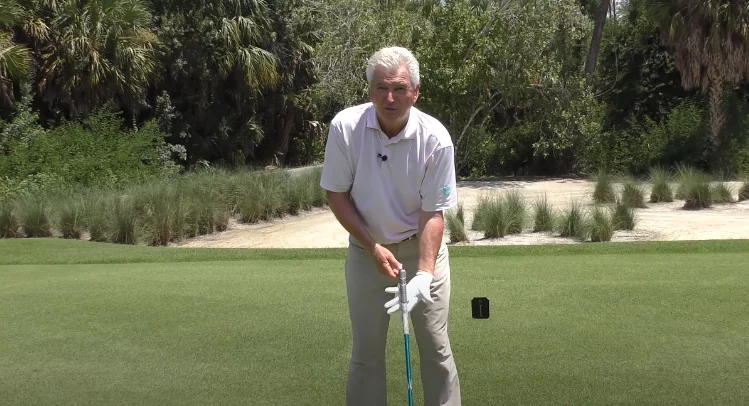
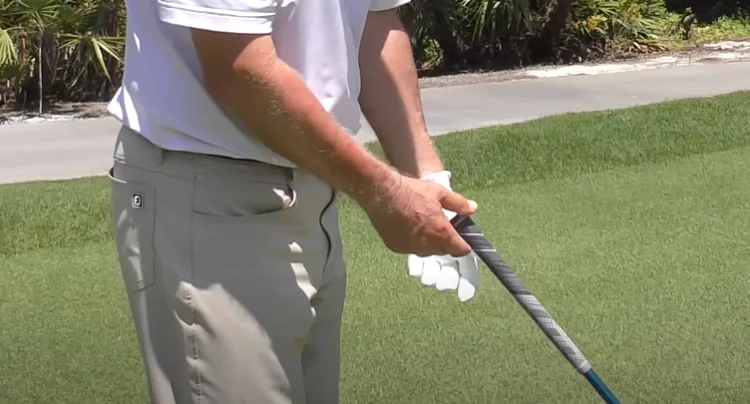
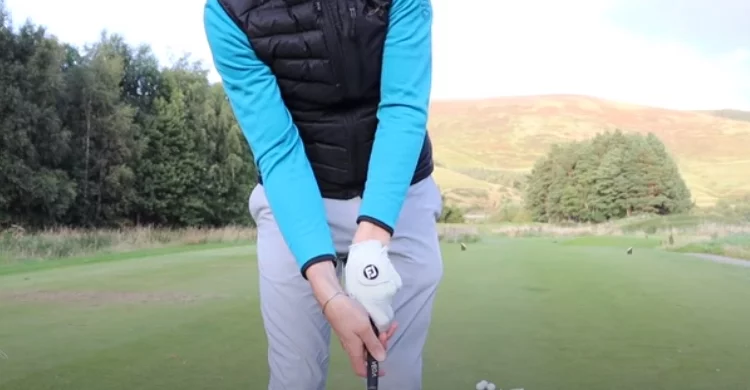
A strong grip means both hands are rotated away from the target (clockwise for right-handed golfers). When you look down at address, you'll see three or more knuckles on your left hand. The V formed by your thumb and index finger points toward your right shoulder or even further right. This position naturally closes the clubface through impact, promoting a draw or hook ball flight.
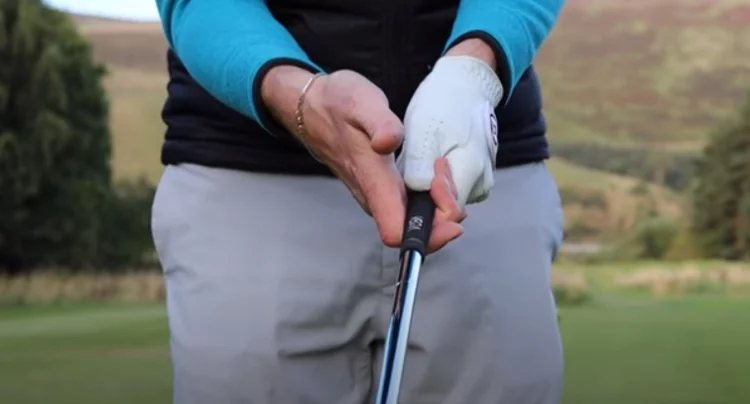
Players who fight a slice often benefit from strengthening their grip. The closed face position at impact counteracts the open-face tendency that sends balls spinning right. Many modern tour players use a slightly strong grip because it promotes a penetrating draw with reduced backspin.
Pro Insight: If you can see more than three knuckles on your lead hand at address, your grip is likely too strong — which trades your slice for a snap hook that's even harder to control.
What Defines a Weak Grip
A weak grip rotates both hands toward the target (counterclockwise for right-handers). You'll see one knuckle or fewer on your left hand at address, and the V points toward your left shoulder or chin. This position holds the clubface open through the hitting zone, promoting a fade or slice.
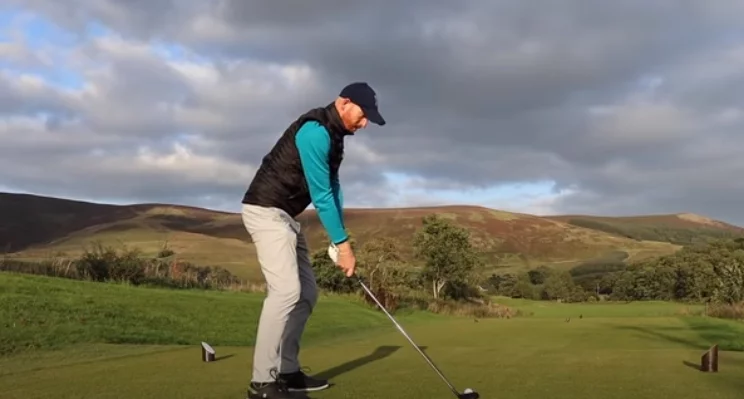
Players who hook the ball excessively use a weaker grip to keep the face from slamming shut. It's also popular among golfers who want to hit a controlled fade — the most reliable shot shape for accuracy off the tee. Ben Hogan famously switched to a weak grip to cure his hook, and it transformed his career.
The Neutral Middle Ground
A neutral grip shows two to two-and-a-half knuckles on the lead hand, with the V pointing between your chin and right shoulder. Most teaching professionals start students here because it requires the fewest compensations in the swing. Your clubface arrives at impact relatively square without you fighting it open or closed.
| Grip Type | Knuckles Visible | V Points Toward | Clubface Tendency | Typical Ball Flight |
|---|---|---|---|---|
| Strong | 3–4 | Right shoulder | Closed | Draw / Hook |
| Neutral | 2–2.5 | Right ear / chin | Square | Straight / slight draw |
| Weak | 0–1 | Left shoulder / chin | Open | Fade / Slice |
Maintaining Grip Consistency on the Course
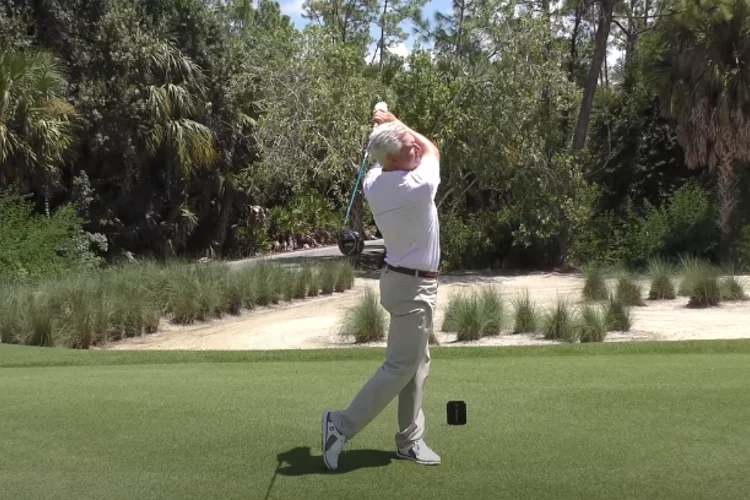
Knowing the theory is one thing. Keeping your grip consistent across 18 holes, through fatigue, pressure, and changing conditions — that's where most golfers fall apart. Your grip tends to drift during a round, especially under stress, and you need deliberate habits to prevent it. This is closely tied to your overall golf grip fundamentals, so revisit the basics regularly.
Grip Pressure and Its Role
Grip pressure affects how your hands rotate through impact. Squeeze too tight and you lock out wrist hinge, reducing clubhead speed and creating tension throughout your arms. Too loose and the club rotates in your hands during the swing, producing inconsistent face angles.
The ideal grip pressure sits around 4–5 on a scale of 10. Think of holding a tube of toothpaste without the cap — firm enough that it won't fly out, light enough that nothing squeezes out. Maintain this pressure consistently from address through impact. Many golfers unconsciously tighten under pressure, so check yourself on the first tee and again at the turn.
Warning: If you notice finger fatigue or forearm tightness by the back nine, you're gripping too hard. Excess tension costs you distance and amplifies your miss pattern in both directions.
Adjusting for Weather and Conditions
Rain and humidity change the equation. When your grips get wet, your hands naturally want to tighten — which alters your swing mechanics. In wet conditions, consider strengthening your grip slightly (rotating one knuckle clockwise) to counteract the tendency for the club to slip open at impact. A quality rain glove paired with corded grips makes this less of an issue.
In cold weather, reduced hand flexibility makes it harder to release the club. Your grip effectively plays stronger when your hands are stiff, so you might need to weaken slightly to avoid pull-hooks on frigid mornings. Understanding how to hit a golf ball straight in all conditions starts with recognizing these environmental factors.
Building Your Long-Term Grip Strategy
Your grip shouldn't stay static forever. As your swing evolves, your physical capabilities change, and your shot patterns shift, your grip needs to evolve with them. The strong vs weak golf grip debate isn't about picking one permanently — it's about understanding which adjustment serves your current game.
Matching Grip to Your Swing Path
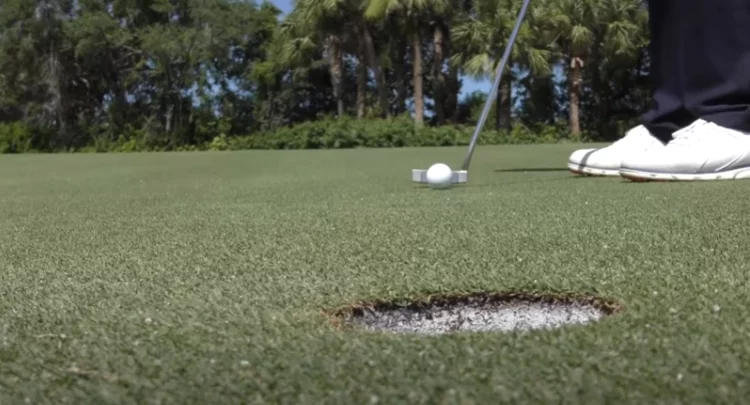
Your grip and swing path must work together. A strong grip paired with an in-to-out path produces massive draws or hooks. A weak grip with an out-to-in path creates big fades or slices. The combinations work like this:
- Strong grip + in-to-out path = exaggerated draw (risk: hook)
- Strong grip + neutral path = controlled draw
- Weak grip + out-to-in path = exaggerated fade (risk: slice)
- Weak grip + neutral path = controlled fade
- Neutral grip + neutral path = straight ball (hardest to repeat)
The optimal combination for most amateurs is a slightly strong grip with a neutral-to-slightly-in-to-out path. This produces a gentle draw that maximizes distance while remaining controllable. If you're unsure about your swing path, a lesson with launch monitor technology gives you definitive data.
Progressive Grip Changes
Never make dramatic grip changes all at once. Your brain needs time to recalibrate. Move one knuckle at a time and give yourself at least two weeks of practice before evaluating results. The initial discomfort you feel with a new grip position is normal — it means you're actually changing something.
Start on the range with short irons. Hit 50 balls with your pitching wedge before moving to longer clubs. The reduced clubhead speed with short irons gives you better feedback on face angle without the punishment of wild misses. Once you're comfortable with wedges, work up through your bag systematically.
Grip Myths That Hold Golfers Back
The internet is full of grip advice that sounds logical but doesn't hold up under scrutiny. These myths persist because they contain a kernel of truth wrapped in oversimplification. Let's set the record straight.
The One-Size-Fits-All Myth
You've probably heard that "neutral is correct and everything else is a bandaid." This is nonsense. There is no universally correct grip position. Your ideal grip depends on your anatomy (hand size, forearm rotation range, wrist flexibility), your swing characteristics, and even your equipment. A golfer with limited forearm supination physically cannot square the face from a weak grip without compensating elsewhere.
Similarly, the idea that a strong grip is "for beginners" while a weak grip is "more advanced" has no basis in reality. Dustin Johnson uses one of the strongest grips on tour. Collin Morikawa plays with a weaker position. Both are elite ball-strikers who chose the grip that matches their individual mechanics.
What the Pros Actually Do
A survey of PGA Tour players shows the majority use a grip that's slightly strong of neutral — roughly 2.5 to 3 knuckles showing. Very few use a truly weak grip. The reason is practical: a slightly strong grip promotes a draw, which typically carries further than a fade due to reduced backspin and a more efficient launch angle.
Tip: Don't copy a tour pro's grip without understanding their full swing. Their grip works within a system of compensations you may not share. Instead, find what produces your best impact conditions.
The other myth worth debunking: "you should never change your grip mid-round." In reality, situational grip adjustments are a legitimate course management tool. Need to hit a low punch under trees? Strengthen slightly. Need to hold a fade into a right-to-left wind? Weaken a touch. These are micro-adjustments, not overhauls — think half a knuckle, not a full hand rotation.
Equipment That Supports Your Grip
Your grip choice doesn't exist in isolation. The physical equipment on your clubs — the rubber or synthetic grip itself — plays a significant role in how effectively you can maintain your chosen hand position. Worn or improperly sized grips undermine even perfect hand placement. Make sure you're also thinking about your overall swing mechanics alongside equipment choices.
Grip Sizes and Materials
Grip diameter directly affects hand action through the swing. Undersized grips promote excessive hand rotation — effectively making your grip play stronger. Oversized grips restrict rotation, making the grip play weaker. If you're fighting a hook, going up one grip size (from standard to midsize) can help without any hand position change.
The proper grip size allows your lead hand's ring finger to barely touch the pad of your thumb when wrapped around the club. If your fingers dig into your palm, the grip is too small. If there's a visible gap, it's too large. Most club fitters can measure this precisely, but the finger-to-palm test works in a pinch.
Material matters too. Corded grips provide maximum traction in all conditions, letting you hold the club lighter without fear of slippage. Softer rubber compounds feel better but wear faster and get slick when wet. Replace your grips every 40–60 rounds regardless of visible wear — the oils from your hands degrade the rubber surface long before it looks worn.
Gloves and Training Aids
A properly fitted glove reinforces your grip position by preventing the club from shifting in your hand. The glove should fit like a second skin with no bunching in the palm or excess material at the fingertips. Cabretta leather provides the best feel and grip, while synthetic materials offer better durability in wet conditions.
Training aids like grip molds and alignment guides can accelerate your transition to a new grip position. These molded rubber attachments slide onto your shaft and force your hands into a specific position. They're useful for building muscle memory during practice sessions, but don't become dependent on them — you need to feel the correct position without external cues before taking it to the course.
Frequently Asked Questions
Which grip is better for fixing a slice?
A stronger grip is the most effective fix for a slice. By rotating your hands away from the target, you close the clubface at impact, counteracting the open-face position that causes slices. Start by showing one additional knuckle on your lead hand and work from there.
Can I use different grip strengths for different clubs?
Yes, and many skilled players do. A slightly stronger grip with the driver promotes the draw needed for maximum distance, while a more neutral grip with wedges gives you better face control for precision shots around the green. Keep changes subtle — no more than half a knuckle between clubs.
How long does it take to adjust to a new grip?
Most golfers need two to four weeks of consistent practice before a grip change feels natural. The first few sessions feel awkward and produce worse results — this is normal. Commit to at least 500 practice balls before judging whether the change is working.
Does hand size affect which grip strength I should use?
Hand size influences grip size selection more than grip strength, but there is a connection. Golfers with smaller hands often find it easier to rotate the club with a strong grip, while those with larger hands may prefer neutral to weak positions because their hands naturally cover more of the grip surface.
Should seniors change their grip as they age?
Many seniors benefit from gradually strengthening their grip as flexibility decreases. Reduced forearm rotation makes it harder to square the face at impact, and a stronger grip compensates for this. Pair the grip change with midsize grips to reduce hand strain from arthritis or joint stiffness.
Key Takeaways
- A strong grip closes the clubface and promotes draws; a weak grip holds it open for fades — choose based on your miss pattern, not generic advice.
- Match your grip strength to your swing path for consistent, predictable ball flight rather than fighting compensations.
- Make grip changes gradually (one knuckle at a time) and give yourself at least two weeks before evaluating results.
- Equipment matters — properly sized grips, fresh rubber, and fitted gloves reinforce your hand position and prevent mid-round drift.



About Bill Winters
Those who have not yet tried the sport just can’t imagine what is driving these golfers to brave the sun’s heat and go around a course bigger than several football fields combined. It seems like an awful lot of work considering that the ball is quite small that is must be hard to hit, the ground of the course is not flat and, most annoying of all, there are sand traps lying around seemingly bent on preventing a player from finishing the course.
Follow & Subscribe for more:


About the Author

The game of golf may seem like an awful lot to take on when one considers that the ball is quite small, must be hard to hit and carry through windy conditions with little chance for error. The ground course has hillsides which make it challenging enough without adding sand traps who seem bent on preventing players from completing their round!
Get the FREE Gifts now. Or receive the latest golf eBooks for free from our bestselling.
Disable Ad Block to reveal all the secrets. Once done, hit a below button: