You're standing in the golf shop, club in hand, wondering if it's the shaft that's been holding your game back all along. Maybe your drives are ballooning left, your irons feel boardy at impact, or you're simply not getting the distance you know you're capable of. The shaft is the engine of every golf club — and choosing the wrong one is one of the most common mistakes golfers make when upgrading their equipment in 2026.
Whether you're a 5-handicapper looking to squeeze out more ball speed with a premium driver shaft or a mid-handicapper wanting consistent iron-to-iron feel with a set of steel shafts, the options can be overwhelming. Graphite versus steel, high launch versus low spin, 60g versus 75g — every variable matters. This guide cuts through the noise with hands-on reviews of the seven best golf club shafts available right now, plus a buying guide that explains exactly what to look for based on your swing speed, ball flight tendencies, and skill level. For a broader look at complete club builds, check out our roundup of the 8 Best Golf Clubs & Golf Club Sets Reviewed 2026.
Every shaft on this list has been selected for its real-world performance, build quality, and value at its price point. These aren't obscure options — they're the shafts that tour players, club fitters, and serious amateur golfers consistently reach for. Let's get into the picks.
Contents
- Editor's Recommendation: Top Picks of 2026
- Full Product Breakdowns
- Fujikura Ventus Blue Driver Shaft — Best Premium Driver Shaft
- True Temper HZRDUS Smoke — Best for Low-Handicap Driver Performance
- True Temper Dynamic Gold 105 — Best Classic Steel Iron Shaft
- UST Mamiya Recoil 760 ES — Best Graphite Iron Shaft for Mid-Handicappers
- Nippon N.S. Pro 950GH — Best Lightweight Steel Wedge/Iron Shaft
- Mitsubishi Diamana S+ — Best X-Stiff Driver Shaft for Aggressive Swingers
- Nippon N.S. Pro Modus3 Tour — Best Complete Iron Set Upgrade
- Choosing the Right Golf Club Shaft: A Buying Guide
- FAQs
Editor's Recommendation: Top Picks of 2026
- #PreviewProductRating
- Bestseller No. 1
 Rating:

- Bestseller No. 2
 Rating:
 - Bestseller No. 3
 Rating:
 - Bestseller No. 4
 Rating:
 - Bestseller No. 5
 Nippon N.S. Pro 950GH .355 Steel Iron Shaft(FLEX: Stiff, LENGTH:35 Inches, COLOR:Chrome, HEAD:Wedge)Rating:
 - Bestseller No. 6
 Rating:
 - Bestseller No. 7
 Rating:

Full Product Breakdowns
1. Fujikura Ventus Blue Driver Shaft — Best Premium Driver Shaft
The Fujikura Ventus Blue is consistently one of the most-played driver shafts on the PGA Tour, and for good reason — it delivers a mid-launch, mid-spin profile that suits a wide range of swing speeds and attack angles. The VeloCore carbon fiber wrapping technology tightens the tip section to reduce twisting at impact, which translates directly to tighter dispersion on off-center strikes. If you've been fighting a snap hook or a weak fade with your current shaft, the Ventus Blue's stable tip is often the fix.
Available in Regular, Stiff, and X-Stiff flexes, this listing includes Callaway-compatible adapters, though the uncut version comes in at 46" for golfers who prefer a custom build. The adapter models ship at standard driver length with a generic grip installed. Build quality is exceptional — Fujikura's multi-material layup is consistent from shaft to shaft, which matters when you're paying premium prices and expect premium results. This isn't a knock-off or a budget imitation; it's the genuine article.
For players with swing speeds between 95 and 110 mph, the Stiff flex is the starting point. Regular flex is best under 95 mph, and X-Stiff is reserved for those consistently exceeding 110 mph. The Ventus Blue rewards a smooth tempo — if you're an aggressive over-the-top swinger, the Ventus Red (higher launch) or Black (lower spin) may actually suit you better, but for the majority of golfers wanting a versatile, tour-validated option, the Blue is the benchmark in 2026.
Pros:
- VeloCore technology reduces face-twist for better directional control
- Mid-launch, mid-spin profile suits a wide range of swing types
- Tour-proven — consistently one of the top driver shafts on professional circuits
- Available with Callaway-compatible adapters for easy drop-in installation
- Consistent flex-to-flex manufacturing quality
Cons:
- Premium price point — not for golfers on a tight budget
- Best results require a fitting session to confirm the correct flex and weight

2. True Temper Project X HZRDUS Smoke — Best for Low-Handicap Driver Performance
The Project X HZRDUS Smoke line from True Temper has become a go-to for low-handicap players who want low-launch, low-spin performance from their driver. The Smoke series comes in three distinct colorways — Black, Green, and Yellow — each tuned to a slightly different spin and launch window. The Smoke Black (featured here at 70g, 6.5 flex) is the lowest-spinning option, designed for players with high swing speeds who need to keep the ball under the wind and maximize rollout distance. The Green plays a touch higher and is the most popular for scratch players wanting a blend of distance and control. The Yellow sits at the highest launch of the three.
Flex designations use a numerical scale: 5.5 is Regular, 6.0 is Stiff, and 6.5 is X-Stiff. These aren't marketing labels — the HZRDUS Smoke genuinely plays stiffer than most shafts rated the same flex, so if you're on the borderline between Stiff and X-Stiff in standard nomenclature, you may find 6.0 is the right call here. The shaft is compatible with an extensive list of TaylorMade models including SLDR, R1, M1 through M6, Sim, Sim2, and Stealth, and the adapter version ships at standard driver length with a standard grip.
For single-digit handicappers who consistently drive the ball over 100 mph, this is one of the most reliable low-spin driver shafts on the market. It's also a strong candidate if you're building a fairway wood that needs to keep spin in check on long par-5 approaches. The 70g weight keeps the club stable through the transition without feeling sluggish at the top.
Pros:
- Three colorway options (Black/Green/Yellow) give precise spin-profile selection
- Numerical flex scale (5.5, 6.0, 6.5) is more accurate than generic R/S/X labels
- Wide TaylorMade adapter compatibility across many popular models
- 70g weight class adds stability for high-speed swings
- Genuinely low spin — not just marketed that way
Cons:
- Plays stiffer than standard ratings — beginners and moderate swing speeds should avoid
- Low launch can hurt carry distance for players with negative attack angles
3. True Temper Dynamic Gold 105 S300 — Best Classic Steel Iron Shaft
Dynamic Gold has been the benchmark steel iron shaft for decades, and the 105 variant modernizes the formula for players who want the classic DG feel at a lower weight. At 103 grams finished weight (the "105" is a nominal designation), this is lighter than the traditional Dynamic Gold 120 but retains the same low-torque, penetrating ball flight that has made DG the shaft of choice on tour. The S300 flex in the standard .355 taper tip is the most commonly fitted stiffness for players with mid-to-high swing speeds.
The 5-iron listed here at 39.0" is the standard length and the reference point for a full set build. The taper tip design means each iron length uses a progressively shorter shaft — this is the traditional approach and requires the shafts to be ordered to specific lengths, not trimmed from a single length. For reshafting an existing set, this is important to note before ordering. The Dynamic Gold 105 delivers the familiar DG feedback — you feel exactly where on the face you made contact — but the slightly reduced weight makes it more accessible for players who find the 120-gram version fatiguing by the back nine.
If you're upgrading from graphite irons or from lightweight steel and want to commit to a steel shaft that will genuinely improve your ballstriking feedback, the Dynamic Gold 105 S300 is the gold standard. It pairs especially well with players-distance irons and cavity-back designs where feel and workability matter as much as forgiveness. For more on how shaft selection fits into your overall iron setup, see our guide to the Best Mid-Handicap Irons: Reviews, Buying Guides and FAQs 2026.
Pros:
- Legendary Dynamic Gold feel at a more manageable 103-gram weight
- Low torque profile delivers penetrating, controlled ball flight
- Excellent feedback — you always know where contact was made
- S300 flex is the standard for competitive amateur iron play
- Available in multiple lengths for precise set builds
Cons:
- Taper tip requires attention to length ordering — not a universal tip
- Lower-handicap oriented — high-handicappers may find the feedback punishing
4. UST Mamiya Recoil 760 ES Iron Shafts — Best Graphite Iron Shaft for Mid-Handicappers
Graphite iron shafts have come a long way from the soft, whippy options of 20 years ago. The UST Mamiya Recoil 760 ES represents the modern graphite iron shaft done right — it's a 68-gram shaft in Regular flex that delivers steel-like stability while offering the vibration dampening and weight reduction that make graphite iron shafts worth considering for a wide range of players. The .370 parallel tip makes it compatible with most modern iron hosels, and Tour Shop Fresno is a well-regarded source for these shafts cut and prepared for installation.
The "ES" designation refers to the shaft's energy-storage design — UST Mamiya engineered the Recoil series to load and unload consistently through the downswing, giving you a reliable energy transfer that translates to consistent distance gapping across your set. At 68 grams, the Regular flex version is ideal for players with swing speeds under 90 mph who want the benefits of graphite without sacrificing the precision feel that steel players expect. The mid-launch, low-spin profile also helps players who struggle with ballooning irons to keep the ball flight flatter and more penetrating.
Mid-handicappers who've been playing graphite in their driver but steel in their irons — and who are starting to notice fatigue or joint discomfort through a full round — should look seriously at the Recoil 760. It bridges the gap between the two materials without the compromises you'd expect. Distance consistency is the standout strength here: your 7-iron will go the same distance on hole 3 and hole 17.
Pros:
- Energy-storage design promotes consistent distance gapping across the set
- Vibration dampening reduces hand and joint fatigue over 18 holes
- .370 parallel tip fits most modern iron hosels without additional preparation
- 68-gram weight bridges graphite and steel without sacrificing stability
- Good option for players transitioning away from heavy steel
Cons:
- Doesn't replicate the precise feedback sensation of quality steel shafts
- Regular flex only at this listing — higher swing speeds need a different variant
5. Nippon N.S. Pro 950GH — Best Lightweight Steel Wedge/Iron Shaft
The Nippon N.S. Pro 950GH is one of the most widely-fitted iron shafts in the world, and the wedge-length version at 35 inches with Stiff flex is a particularly smart buy for anyone who wants consistent control in their scoring clubs. Weighing in at just under 95 grams finished, the 950GH sits in the lightweight steel category — significantly lighter than Dynamic Gold but with more heft and stability than most graphite options. This is the shaft that makes a lot of golfers realize they've been playing shafts that are either too heavy or too whippy for their game.
The chrome finish is clean and professional-looking, and the .355 taper tip is the standard for wedge and iron applications. The Stiff flex in this wedge-specific 35" length is appropriate for players with iron swing speeds above 80 mph — most golfers in the 10–20 handicap range will fit into this specification. The 950GH's mid-launch profile suits the wedge application particularly well, giving you the trajectory control to hold greens without the ball ballooning on full wedge shots. Understanding how your wedge shafts interact with your distances is as important as knowing your lofts — our Golf Wedge Distances by Degree chart is a useful companion reference.
For players who have been playing Dynamic Gold in their irons but want to explore a lighter steel option without moving to graphite, the 950GH is the natural upgrade path. You'll gain club speed and likely distance while retaining the through-impact feedback that steel players prize. The wedge-specific listing here is ideal for a gap wedge or sand wedge reshaft project.
Pros:
- Lightweight steel (sub-95g) helps players increase swing speed without switching to graphite
- Mid-launch profile is ideal for controlling wedge trajectory
- .355 taper tip is the industry standard for wedge and iron hosels
- Chrome finish is durable and looks great in any head
- One of the most widely fitted shafts in the world — extensively tested and trusted
Cons:
- Lighter weight means slightly less feedback than heavier steel options
- This listing is wedge-specific — full iron set builds require ordering multiple lengths
6. Mitsubishi Diamana S+ Blue Board 60g X-Stiff — Best for Aggressive High-Speed Swingers
Mitsubishi's Diamana line has always been about precision engineering, and the S+ Blue Board is their flagship mid-launch, mid-spin driver shaft — the "Blue Board" name refers to the specific prepreg carbon fiber material used in the tip section, which is stiffer and more responsive than standard carbon layups. At 60g in X-Stiff, this shaft is built for players who generate over 110 mph of clubhead speed and want the ball flight dialed in rather than launched high. The mid-launch, mid-spin spec listed is accurate — this isn't a low-spin specialist, but it controls spin effectively for high-speed players who might otherwise balloon their shots.
The listing here comes as a shaft-only option with your choice of adapter and a grip included, which is the right way to buy this shaft if you're doing a drop-in replacement into an existing driver. Mitsubishi's customization contact option for specific adapter configurations is a genuine value-add. The gray colorway on this variant is clean and discreet — it won't look out of place sticking out of a premium driver head.
The Diamana S+ Blue competes directly with the Fujikura Ventus Blue in terms of market position, and choosing between them often comes down to a fitting session. The Diamana tends to feel slightly smoother through the transition, while the Ventus Blue has a more responsive, snappier feel through impact. If you've tried the Ventus Blue and wanted just a touch more smoothness, the Diamana S+ is your answer. This is a shaft for serious golfers only — at X-Stiff in a 60g profile, there's no margin for an inconsistent swing tempo.
Pros:
- Blue Board prepreg tip section delivers exceptional stability at high swing speeds
- Mid-launch, mid-spin profile suits most aggressive swing types
- Comes with adapter and grip for a complete drop-in solution
- Custom adapter configurations available from the seller
- Clean, professional gray colorway
Cons:
- X-Stiff only in this listing — not suitable for moderate swing speeds
- "Generic" branding on some components may concern purists
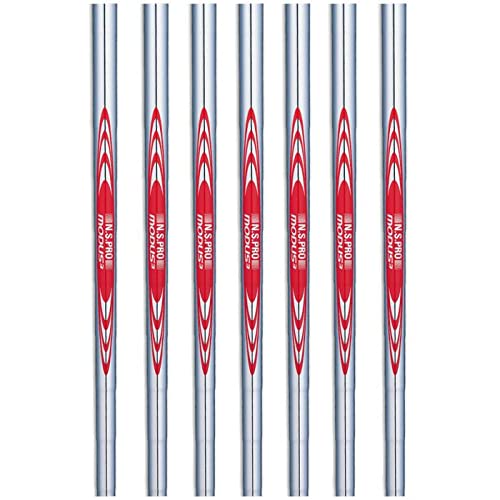
7. Nippon N.S. Pro Modus3 Tour 5-PW Set — Best Complete Iron Set Upgrade
If you're reshafting a full iron set and want a single high-quality option that covers every iron from 5-iron through pitching wedge, the Nippon N.S. Pro Modus3 Tour 105 in Stiff flex as a 6-shaft set is one of the best value plays in golf equipment right now. Supplied by GRIPS4LESS in the .355 tapered tip configuration, these six shafts arrive properly cut and matched for a complete iron set reshaft. The Modus3 Tour 105 is one of the most popular tour-spec iron shafts in professional golf — it delivers a higher, softer ball flight than the Dynamic Gold series while maintaining the low-torque stability that competitive players demand.
The 105-gram Stiff flex spec occupies a sweet spot: heavier than the 950GH (which is more of a mid-weight shaft) but more accessible than the full Dynamic Gold 120. Players with swing speeds in the 85–100 mph range for their 6-iron will find the Stiff flex calibrated correctly for consistent gapping. The Modus3 Tour's distinctive characteristic is its softer, higher launch — if you play courses with firm, fast greens that need to be attacked with a high approach, these shafts work with you rather than against you.
Buying six shafts as a matched set through this listing ensures consistent performance from 5-iron to PW. Individual shaft variation is essentially zero when they come from the same production batch, which is a meaningful advantage over mixing shafts sourced from different channels. If you're also evaluating a full club upgrade — rather than just a reshaft — our review of the 8 Best Golf Clubs & Golf Club Sets Reviewed 2026 gives you the full picture.
Pros:
- Complete 6-shaft set (5-PW) ensures matched, consistent performance across the bag
- Higher, softer launch than Dynamic Gold — excellent for attacking firm greens
- Tour-proven Modus3 profile used by many PGA Tour professionals
- 105g Stiff flex is ideal for a wide range of competitive amateur swing speeds
- .355 taper tip is the standard for iron hosels worldwide
Cons:
- Stiff only in this listing — slower swing speeds need a different flex
- Set does not include a gap wedge or sand wedge shaft
Choosing the Right Golf Club Shaft: A Buying Guide
The shaft is the single most important component in a golf club after the clubhead itself — and many fitting experts argue it matters more. According to the golf shaft overview on Wikipedia, shaft flex, weight, torque, and kick point all influence launch conditions, spin rate, and feel at impact. Here's what you need to understand before committing to any of the options above or browsing our full equipment reviews.
Flex: The Most Misunderstood Variable
Flex ratings — Regular, Stiff, X-Stiff — are not standardized across manufacturers. A "Stiff" shaft from one brand may play closer to Regular from another. The practical test is your swing speed:
- Under 85 mph driver swing speed: Regular flex — you need the shaft to help load and return energy through impact
- 85–95 mph: Stiff flex — the most common spec for recreational golfers who play regularly
- 95–110 mph: Stiff or X-Stiff depending on your tempo — fast, smooth swingers often stay in Stiff; aggressive, quick transitioners benefit from X-Stiff
- Over 110 mph: X-Stiff — playing too soft a shaft at high speeds creates excessive spin and inconsistent ball flight
Tempo matters as much as speed. A player with a fast but smooth swing can often play one flex lighter than a player with an equally fast but aggressive, quick-transition move. If you're not sure where you fall, a launch monitor session at a fitting center gives you the data you need.
Shaft Weight: Getting the Balance Right
Shaft weight has a direct relationship with swing feel, consistency, and clubhead speed. Heavier shafts (100g+) promote tighter dispersion for players with fast swings; lighter shafts (50–70g) help players with moderate swing speeds generate more speed. Here's the practical breakdown:
- Driver shafts (graphite, 40–80g): Most players benefit from 50–65g in the driver. Heavier isn't always better — it depends on your speed and transition
- Iron shafts — steel (95–130g): Traditional range; Dynamic Gold 105 and Modus3 Tour 105 sit at the lighter end of steel, which suits most modern players
- Iron shafts — graphite (60–90g): Correct for players with arthritis, swing speed under 80 mph, or anyone carrying joint concerns over 18 holes
The mistake most golfers make is assuming heavier equals more control. In reality, the best shaft weight is the one that lets you swing at your natural tempo without forcing. If you're fighting your equipment, the weight is wrong.
Kick Point and Launch Characteristics
Kick point — also called bend point — describes where the shaft flexes most during the swing. This has a direct impact on launch angle and spin rate:
- Low kick point: Flexes near the tip; promotes higher launch and more spin. Good for players who struggle to get the ball airborne
- Mid kick point: The most versatile option — suits most swing types and is what the Fujikura Ventus Blue and Nippon 950GH offer
- High kick point: Flexes near the grip; promotes lower launch and reduced spin. Suited for fast-swingers who already launch the ball high
For irons, high kick point (stiffer tip) shafts like the Dynamic Gold produce the penetrating, tour-style ball flight that experienced players prefer. For driver shafts on players who already produce enough speed, a mid or high kick point keeps spin numbers in check.
Steel vs. Graphite: Making the Right Call for Your Irons
This debate has shifted significantly in the last decade. Modern graphite iron shafts — particularly options like the UST Mamiya Recoil — now match steel in terms of consistency and torque. The decision should come down to your specific situation:
- Choose steel if: you prioritize feel and feedback, you have a consistent swing speed above 85 mph, and you want the sharpest possible distance gapping
- Choose graphite if: you're managing joint discomfort, your swing speed is under 80 mph, or you play multiple rounds per week and notice fatigue in your hands and forearms
- Consider lightweight steel (950GH, Modus3 105) as the middle ground: the feedback of steel with significantly less fatigue than the traditional 120g options
For players building out a complete bag — not just shafts but clubs — our review of the 7 Best Hybrid Golf Clubs Reviewed 2026 covers how shaft flex interacts with hybrid design for the clubs most golfers find hardest to fit correctly.
FAQs
What shaft flex should I use for my driver?
Your driver swing speed is the primary guide. Under 85 mph: Regular. Between 85 and 95 mph: Stiff. Above 95 mph: Stiff or X-Stiff depending on your transition tempo. Playing too stiff a shaft reduces launch and distance; playing too flexible increases spin and causes inconsistent shot shape. When in doubt, a launch monitor session at a fitting center will give you the data to choose correctly. A shaft fitting takes 30 minutes and often produces more improvement than a new clubhead.
What is the difference between graphite and steel iron shafts?
Steel shafts are heavier (95–130g), offer more consistent feedback at impact, and suit players with faster, more reliable swing speeds. Graphite shafts are lighter (60–90g), dampen vibration, and help players generate more speed — which is why they're recommended for seniors, juniors, women, and anyone managing joint discomfort. Modern graphite options like the UST Mamiya Recoil have largely closed the feel gap with steel, making the choice more about weight and vibration management than quality.
Does the shaft really make that much difference?
Yes — significantly more than most golfers expect. The shaft controls the timing of your release, the height of your ball flight, how much spin you put on the ball, and how the clubhead feels through impact. An incorrectly fitted shaft can cost you 20–30 yards of distance and add significant dispersion to your misses. Tour players change shafts regularly as their swing characteristics evolve, and the best investment many amateur golfers can make is a professional shaft fitting before spending money on a new clubhead.
What does kick point mean and how does it affect my shots?
Kick point (or bend point) describes where the shaft bends most during the downswing. A low kick point bends near the tip and promotes a higher launch with more spin — it helps players who struggle to get the ball up. A high kick point bends near the grip and keeps launch low with reduced spin — it suits fast-swingers who already launch the ball high and want more control. Most shafts feature a mid kick point that works well across a broad range of swing types. Kick point affects both driver and iron shafts, though it's discussed most often in the context of driver fitting.
How do I know if my current shaft is wrong for my swing?
The most common symptoms of a mismatched shaft are: inconsistent distance gapping between clubs, a ball flight that curves more than expected, excessive spin that causes the ball to balloon in the wind, a feeling of fighting the shaft through the downswing, or regular fatigue in your hands and forearms by the back nine. If you're hitting your irons well but your driver is wildly inconsistent, the driver shaft is the first suspect. Any one of these symptoms warrants a fitting session before buying a new set of clubs.
Can I install a new driver shaft myself at home?
Yes, if you have the right tools: a heat gun or epoxy heat stick, clubmaking epoxy, a shaft puller or rubber vice clamp, and ferrules if required. The process involves heating the hosel to break the existing epoxy bond, cleaning the hosel bore, applying fresh two-part epoxy, inserting the new shaft to the correct depth, and allowing 24 hours to cure before play. If you're working with a new adapter-tipped shaft (like the Fujikura Ventus Blue or Diamana S+ listings here), the process is even simpler — the adapter clicks directly into the driver head without any epoxy. Most golfers find adapter shafts the most DIY-friendly option.
Buy on Walmart
- Fujikura Ventus Blue Driver Shaft (Choose Flex and Compatibl — Walmart Link
- TRUE TEMPER New Project X HZRDUS Smoke Driver/Fairway Shafts — Walmart Link
- TRUE TEMPER Dynamic Gold 105 S300 Stiff Flex Iron Shafts - . — Walmart Link
- Tour Shop Fresno UST Mamiya Recoil 760 ES Iron Shafts - 370 — Walmart Link
- Nippon N.S. Pro 950GH .355 Steel Iron Shaft(FLEX: Stiff, LEN — Walmart Link
- Generic Mitsubishi Diamana S+ (Blue Board) 60 X Stiff Driver — Walmart Link
- Nippon N.S. Pro Modus3 Tour 5-PW Set Tapered tip .355" (Sele — Walmart Link
Buy on eBay
- Fujikura Ventus Blue Driver Shaft (Choose Flex and Compatibl — eBay Link
- TRUE TEMPER New Project X HZRDUS Smoke Driver/Fairway Shafts — eBay Link
- TRUE TEMPER Dynamic Gold 105 S300 Stiff Flex Iron Shafts - . — eBay Link
- Tour Shop Fresno UST Mamiya Recoil 760 ES Iron Shafts - 370 — eBay Link
- Nippon N.S. Pro 950GH .355 Steel Iron Shaft(FLEX: Stiff, LEN — eBay Link
- Generic Mitsubishi Diamana S+ (Blue Board) 60 X Stiff Driver — eBay Link
- Nippon N.S. Pro Modus3 Tour 5-PW Set Tapered tip .355" (Sele — eBay Link
The right shaft doesn't fix a bad swing — but the wrong shaft makes a good swing look broken every single time.



About Bill Winters
Those who have not yet tried the sport just can’t imagine what is driving these golfers to brave the sun’s heat and go around a course bigger than several football fields combined. It seems like an awful lot of work considering that the ball is quite small that is must be hard to hit, the ground of the course is not flat and, most annoying of all, there are sand traps lying around seemingly bent on preventing a player from finishing the course.
Follow & Subscribe for more:


About the Author

The game of golf may seem like an awful lot to take on when one considers that the ball is quite small, must be hard to hit and carry through windy conditions with little chance for error. The ground course has hillsides which make it challenging enough without adding sand traps who seem bent on preventing players from completing their round!
Get the FREE Gifts now. Or receive the latest golf eBooks for free from our bestselling.
Disable Ad Block to reveal all the secrets. Once done, hit a below button: