You can carry a maximum of 14 clubs in your golf bag — that's the rule set by the USGA and R&A, and it applies to every competitive round you play. Understanding how many clubs golf bag rules allow helps you avoid penalties and build a set that actually covers the distances you need. Whether you're a beginner picking your first club set or a seasoned player fine-tuning your lineup, knowing the limit is just the starting point. The real question is how to fill those 14 slots strategically so you're never stuck between clubs on the course.

This rule has been in place since 1938, and it exists to keep the game fair. Before the limit, wealthy players would stuff 20+ clubs in their bags, giving them an edge over golfers who couldn't afford that many. The 14-club cap leveled the playing field and forced every golfer to think carefully about club selection — a skill that separates good players from great ones.
Below, you'll find everything you need to know about the club limit: why it exists, what happens if you break it, how to pick the right combination for your game, and common myths that trip golfers up. Let's dig in.
Contents
The 14-Club Rule Explained
The question of how many clubs golf bag regulations permit has a straightforward answer, but the details matter. Rule 4.1b of the Rules of Golf states that a player must not start a round with more than 14 clubs and must not use more than 14 clubs during the round. This applies to all sanctioned competition — from your local club championship to the Masters.
Where the Rule Comes From
Before 1938, there was no limit. Players like Lawson Little reportedly carried 30+ clubs. The USGA and R&A introduced the 14-club cap to:
- Reduce the advantage wealthy players had over average golfers
- Speed up play (fewer clubs means faster decisions)
- Reduce caddie workload and bag weight
- Force strategic thinking about club selection
The number 14 wasn't arbitrary — committees surveyed top players at the time and found that most used between 12 and 16 clubs regularly. Fourteen was the compromise.
What Counts as a Club
Every club in your bag counts toward the 14, including:
- Your putter (yes, it's a club)
- Any club you're "testing" or borrowed from a partner
- A broken club that's still in your bag
- Alignment sticks do NOT count — they're training aids, not clubs
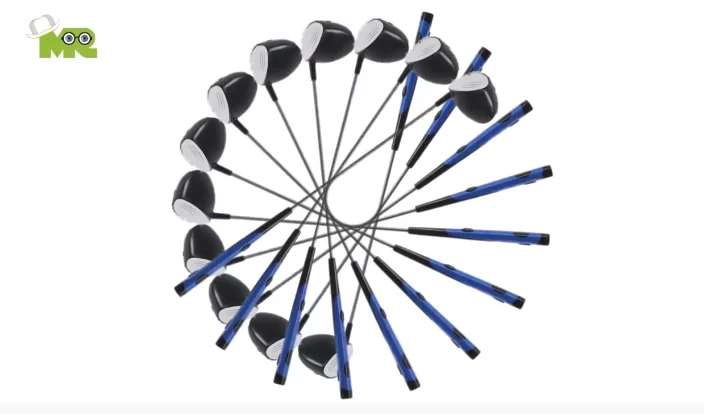
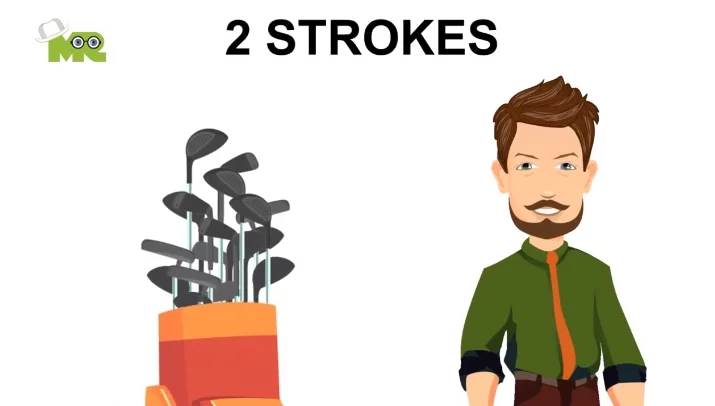
Pro Tip: Count your clubs before every round. It takes 10 seconds and can save you a two-stroke penalty. Make it part of your pre-round routine, right after checking your ball supply.
Benefits and Drawbacks of the 14-Club Limit
The club limit affects every golfer differently depending on skill level, playing style, and the courses you frequent. Here's an honest look at both sides.
Why the Limit Helps Your Game
- Forces you to know your distances. With limited options, you learn exactly how far each club goes — a skill that understanding your wedge distances builds from the ground up.
- Lighter bag means less fatigue, especially if you walk 18 holes
- Fewer choices speed up your decision-making on course
- You develop creativity — learning to hit half-shots and punch shots with fewer clubs
- Budget-friendly for beginners who don't need to buy 14 clubs right away
When the Limit Feels Restrictive
- Gap between your longest iron and fairway wood can leave a "dead zone" of 20-30 yards
- Course conditions change (wind, wet fairways) and you can't swap clubs mid-round
- Players who struggle with long irons may want both a 4-hybrid AND a 5-hybrid but can't fit both
- Specialty shots (extreme lob, intentional draw) sometimes demand a club you left at home
The key takeaway: the limit rewards golfers who practice their swing with each club rather than relying on having a club for every possible yardage.

Penalties for Carrying Too Many Clubs
Accidentally packing a 15th club isn't just embarrassing — it costs you strokes. The penalties differ between stroke play and match play, and they're applied per hole where the violation existed, not per extra club.
Stroke Play Penalties
| Situation | Penalty | Maximum Penalty |
|---|---|---|
| 1 extra club discovered on hole 1 | 2 strokes per hole played with violation | 4 strokes max |
| Extra club found on hole 5 (carried since start) | 2 strokes for each of holes 1–5 | 4 strokes max (capped) |
| Extra club found on hole 2 | 2 strokes × 2 holes | 4 strokes |
| Two extra clubs found | Same 2 per hole, 4 max (not per club) | 4 strokes max |
The penalty is capped at 4 strokes total in stroke play. Once you discover the violation, you must immediately declare the extra club "out of play" by turning it upside down in your bag or informing your playing partners.
Match Play Penalties
- You lose the current hole for each hole where the violation occurred
- Maximum penalty: adjustment of 2 holes in the match standing
- If discovered between holes, the penalty applies to the hole just completed

In casual rounds, nobody's going to penalize you. But in any event with a scorecard and a handicap posting — including your regular weekend game if you post scores for your golf handicap — the rule applies.
Common Myths About Golf Bag Club Limits
Golfers pass around bad information like it's a sleeve of Pro V1s on the first tee. Here are the myths that need to die about how many clubs golf bag rules actually allow.
Myth: You Need All 14 Clubs
The truth: You can carry fewer than 14 clubs — there's no minimum. Many pros have occasionally played with 13 or even fewer when they felt a particular club wasn't performing. Beginners especially benefit from starting with 7-10 clubs and adding more as their game develops.
A stripped-down set forces you to develop shot-making skills. Carrying a quality hybrid that you hit well is worth more than three specialty clubs gathering dust in your bag.
Myth: You Can Add Clubs Mid-Round
The truth: You CAN add clubs during a round — but only if you started with fewer than 14. If you begin with 12, you can add up to 2 more at any point. However, you cannot:
- Borrow a club from another player who is playing on the course
- Add a club that changes the playing characteristics of a club already in your bag
- Exceed 14 total at any point during the round
You CAN share clubs with a partner only if your combined total doesn't exceed 14 (rare scenario, usually in team formats).

Warning: If a playing partner leaves a club near your bag and you accidentally pick it up, it's now "your" club even though you never used it. Always verify stray clubs don't end up in your bag after shared practice greens.
Other myths worth busting quickly:
- "Putters don't count" — False. Your putter is club #1 in the count.
- "The rule only applies to tournaments" — False. It applies to any round played under the Rules of Golf, including casual rounds where you post a handicap score.
- "You can replace a broken club" — True, but only if YOU didn't damage it in anger. If it broke during normal play, you can replace it or play without it.
How to Build Your Ideal 14-Club Setup
Now that you know the limits, let's talk strategy. The best 14-club combination depends on your skill level, typical course conditions, and personal strengths. Here's how to fill those slots wisely.
Recommended Setup for Beginners
If you're just learning how to play golf, don't rush to fill all 14 slots. Start with clubs you can actually hit consistently:
- Driver — for tee shots on par 4s and 5s
- 3-wood or 5-wood — versatile from fairway and tee
- 5-hybrid — replaces hard-to-hit long irons
- 6-iron through 9-iron — your scoring clubs (4 clubs)
- Pitching wedge — approach shots from 100-130 yards
- Sand wedge — bunkers and pitches around the green
- Putter — non-negotiable
That's 10 clubs. As your game improves, add a gap wedge, a 4-hybrid, and then specialty clubs based on where you lose the most strokes. Proper technique matters more than having 14 clubs — make sure you grip the club correctly before worrying about filling every slot.
Intermediate and Advanced Configurations
Once you're consistently breaking 90, your 14 clubs should be tailored to your specific game. Here are two common configurations:
Standard configuration (distance-focused):
- Driver
- 3-wood, 5-wood
- 4-hybrid
- 5-iron through pitching wedge (6 clubs)
- Gap wedge, sand wedge, lob wedge
- Putter
Short-game configuration (scoring-focused):
- Driver
- 3-wood
- 4-hybrid, 5-hybrid
- 6-iron through pitching wedge (5 clubs)
- Gap wedge, sand wedge, lob wedge
- Putter
The second setup sacrifices a fairway wood for an extra hybrid and drops the 5-iron. This works well if you play courses with tight approaches and tricky greens. Look at where you're losing strokes — if it's around the green, load up on wedges. If it's off the tee, keep that extra fairway wood.

The best advice for any golfer: visit a golf equipment fitting center and get data on your distances with each club. You'll quickly see where your gaps are and which 14 clubs cover the most ground for your swing speed and ball flight.
Frequently Asked Questions
Can you carry fewer than 14 clubs in a golf bag?
Yes. There is no minimum number of clubs required. You can play with as few as one club if you want. Many beginners start with 7-10 clubs and add more as their skills improve. Some experienced golfers intentionally carry fewer clubs to simplify decisions and sharpen their shot-making abilities.
What happens if you accidentally carry 15 clubs in a tournament?
In stroke play, you receive a two-stroke penalty for each hole played while carrying the extra club, up to a maximum of four strokes. In match play, you lose each hole where the violation occurred, up to a maximum deduction of two holes. You must immediately declare the extra club out of play once discovered.
Do golf clubs count toward the 14 if they're broken?
A broken club still in your bag counts toward your 14. If the club broke during normal use (not in anger), you can replace it without penalty, repair it, or continue playing without it. If you damaged it intentionally or through abuse, you cannot replace it and it still occupies one of your 14 slots.
Next Steps
- Count your clubs right now. Open your bag, pull everything out, and verify you have exactly 14 or fewer. Remove any forgotten range clubs or borrowed wedges lurking in side pockets.
- Map your distance gaps. Hit each club 10 times at the range and record your average carry distance. Look for gaps larger than 15 yards between consecutive clubs — those are the slots you need to fill or adjust.
- Evaluate your last 5 rounds. Identify where you lost the most strokes. If it's approach shots from 100-150 yards, consider adding a wedge. If it's tee shots, upgrade your driver or add a driving iron.
- Create a pre-round checklist. Tape a list of your 14 clubs inside your bag or save it in your phone. Check it before every competitive round to avoid accidental penalties.
- Test a minimal set. Play one casual round with only 8-10 clubs. You'll learn which clubs you actually rely on and which ones just add weight to your bag.



About Bill Winters
Those who have not yet tried the sport just can’t imagine what is driving these golfers to brave the sun’s heat and go around a course bigger than several football fields combined. It seems like an awful lot of work considering that the ball is quite small that is must be hard to hit, the ground of the course is not flat and, most annoying of all, there are sand traps lying around seemingly bent on preventing a player from finishing the course.
Follow & Subscribe for more:


About the Author

The game of golf may seem like an awful lot to take on when one considers that the ball is quite small, must be hard to hit and carry through windy conditions with little chance for error. The ground course has hillsides which make it challenging enough without adding sand traps who seem bent on preventing players from completing their round!
Get the FREE Gifts now. Or receive the latest golf eBooks for free from our bestselling.
Disable Ad Block to reveal all the secrets. Once done, hit a below button: