Roughly 75 percent of recreational golfers carry at least one hybrid in their bag, yet consistent, confident ball-striking with that club remains elusive for the majority — a gap that translates directly to dropped shots on par-3s, long approach shots, and recovery situations. Learning how to hit a hybrid club correctly is one of the highest-leverage improvements available to any mid- or high-handicapper, because this single club covers situations where both long irons and fairway woods fall short. If you're evaluating your full set, the golf clubs guide covers every category; this piece focuses entirely on getting the most out of your hybrid.
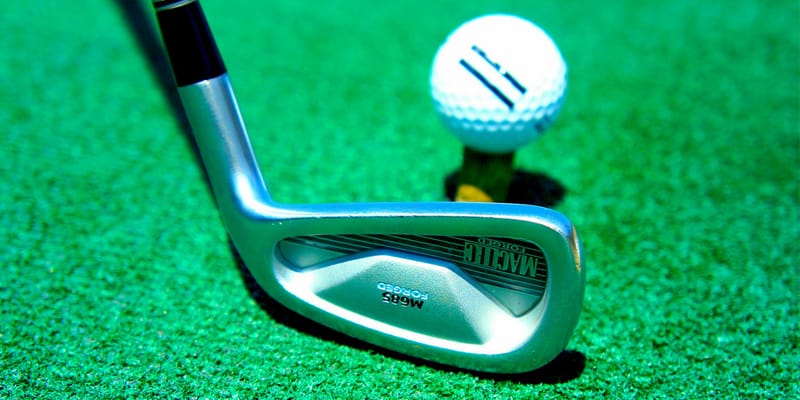
The hybrid's design pulls from two club families — the iron and the fairway wood — to produce something that outperforms both in specific situations. A wider, shallower sole glides through turf rather than digging. A lower center of gravity launches the ball on a high, penetrating trajectory without requiring you to swing harder. Off-center strikes still produce usable results because the perimeter weighting distributes forgiveness across the face. Every element of that design, however, functions best when your setup and motion align with what the club expects.
The golfers who struggle with hybrids are almost never lacking in ability. They're missing alignment between technique and design intent. They set up to the hybrid the same way they'd address a 4-iron, or they swing it the same way they'd swing a 3-wood, and then wonder why the result feels inconsistent. This guide corrects that. Every instruction here is grounded in what the club's geometry actually rewards at impact.
Contents
- The Hybrid's Origin and Design Logic
- Choosing the Right Hybrid for Your Bag
- How to Hit a Hybrid Club: Full Technique Breakdown
- Situations Where the Hybrid Is the Correct Club
- When to Use a Hybrid — and When to Choose Something Else
- Advanced Adjustments for Better Hybrids
- Hybrid Myths That Are Costing You Shots
- Lessons From How Tour Players Use Hybrids
- Frequently Asked Questions
The Hybrid's Origin and Design Logic
A Response to a Real Problem
The hybrid emerged in the late 1990s as equipment designers responded to a clear pattern: amateur golfers were consistently inconsistent with long irons. The hybrid club was engineered to replace the 1- through 4-iron for most recreational players while delivering more versatility than a fairway wood in tight-lie situations. The result changed how golfers approach the long game — not just in equipment selection, but in course strategy and shot-making confidence.
The key insight behind the design is that amateur golfers generate most of their errors with long irons through shallow attack angles and off-center contact. A standard long iron demands a steeper approach and a precise strike to compress the ball effectively. Most golfers simply don't generate the swing speed or consistent ball-striking to deliver that on demand. The hybrid solves both problems simultaneously by moving the center of gravity lower and further back, which self-corrects the launch and produces usable spin rates even on thin contact.
Why the Physics Work in Your Favor
When you study the geometry of a hybrid head, you'll notice the face is slightly more upright than a fairway wood and the sole is considerably wider than an iron. That sole width accomplishes two things: it prevents the leading edge from digging at impact, and it keeps the face stable through grass and turf variations. The result is a club that behaves more predictably across different lies — rough, fairway, hardpan — than either of its parent clubs. Understanding that architecture is the first step toward trusting the hybrid and swinging it with real conviction.
Choosing the Right Hybrid for Your Bag
Matching Loft to the Gap in Your Set
Before you can master how to hit a hybrid club, you need the right one in your hands. Most hybrids are sold as numerical replacements for long irons — a 3-hybrid replacing a 3-iron, a 4-hybrid replacing a 4-iron — but actual loft angles vary meaningfully by manufacturer. Use the table below as a starting reference, then verify the specific loft of any model you're considering against the club it needs to replace in your current set.
| Hybrid Number | Typical Loft Range | Replaces | Avg. Carry (Men) | Avg. Carry (Women) |
|---|---|---|---|---|
| 2-Hybrid | 16°–18° | 2-Iron / 4-Wood | 195–215 yards | 150–170 yards |
| 3-Hybrid | 19°–21° | 3-Iron / 5-Wood | 180–200 yards | 135–155 yards |
| 4-Hybrid | 22°–25° | 4-Iron / 7-Wood | 165–185 yards | 120–140 yards |
| 5-Hybrid | 26°–28° | 5-Iron / 9-Wood | 150–170 yards | 105–125 yards |
| 6-Hybrid | 29°–32° | 6-Iron | 135–155 yards | 90–110 yards |
Shaft Flex and Weight
Shaft selection matters here as much as in any other club. A shaft that's too stiff causes you to lose height and pull shots left; one that's too flexible delivers inconsistent launch and excessive curvature. If you're unsure which flex suits your swing, the detailed breakdown at Which Flex Is Right for Your Golf Clubs walks you through the decision by swing speed and shot shape. As a general rule, hybrid shafts tend to run slightly lighter than iron shafts, and that lighter weight naturally encourages the sweeping motion the club prefers.
Graphite is the right shaft material for most hybrid players. The lighter overall weight increases swing speed marginally, and the vibration dampening makes off-center strikes more comfortable — which matters because you'll be hitting the hybrid from a wide range of lies, not exclusively clean fairway turf. Unless you're a low-single-digit player with a strong preference for steel's feedback, default to graphite.
How to Hit a Hybrid Club: Full Technique Breakdown
Setup and Ball Position
Ball position is where most hybrid technique errors begin. Place the ball one to two ball-widths inside your lead heel — further forward than a mid-iron, slightly further back than a fairway wood. Your feet should be roughly shoulder-width apart, weight distribution neutral at address: not leaning toward the target, not stacked on your trail foot. The shaft should sit at a gentle forward lean — not the aggressive lean you'd use with a wedge, but not vertical either.
Your posture sets the angle of attack before you swing a single inch. Stand tall enough that your arms hang comfortably under your shoulders. A setup that crowds the ball produces a steep, choppy swing path; a setup with too much bend at the waist encourages a flat, sweeping path that contacts the ground behind the ball. Find the neutral middle, and your natural swing arc will deliver the shallow downward strike the hybrid is built to reward.
The Right Swing Path
The ideal hybrid swing is a gentle downward sweep — steeper than a fairway wood, shallower than a mid-iron. Think of it as brushing the grass rather than taking a divot. The wide sole of the hybrid is designed to slide through turf at a shallow angle; if you swing steeply, you fight the design instead of working with it. Your backswing should feel like a one-piece takeaway with the club tracking along the natural plane of your arms and shoulders, without any conscious manipulation of the face angle.
The most common swing path error with hybrids is the over-the-top move that produces a pull or a slice. If you're dragging the club outside the target line on the downswing, the ball exits left of target and you lose both accuracy and distance. The fix is straightforward: feel your trail elbow drop toward your hip in the early downswing before you rotate. That small move keeps the club on the inside track and delivers the slightly in-to-out path that generates the controlled draw most hybrid shots benefit from. If shot shape is something you're actively working on, the primer at What is a Draw in Golf clarifies exactly what to aim for.
Impact and Follow-Through
At impact, your hips should be rotated slightly open to the target, your weight transferring toward your lead side, and your hands just ahead of the ball. This forward shaft lean at impact — slight, not aggressive — is what delivers compression and produces that satisfying, penetrating ball flight. Don't try to help the ball up by scooping. The loft is built into the face. Trust it. Any attempt to lift the ball manually adds dynamic loft, reduces compression, and sends the ball ballooning without forward penetration or distance control.
Follow through fully and without hesitation. The hybrid's design rewards a complete rotation to a balanced finish. Stopping your rotation through impact because you're uncertain of the shot is one of the most reliable ways to produce a thin strike or a pulled result. Commit to the swing — the club handles the rest.
Situations Where the Hybrid Is the Correct Club
Tight Lies, Rough, and In-Between Distances
The hybrid earns its keep in situations that frustrate players who rely exclusively on irons or woods. From a tight lie on hardpan or closely mown fairway, the wide sole prevents the leading edge from catching the ground, while an iron in the same spot demands precise ball-first contact to avoid a thin. From moderate rough — the kind that grabs a fairway wood's longer hosel but doesn't fully suppress a shot — the hybrid's shorter head and lower center of gravity cut through more cleanly and deliver more predictable distance. It removes variables from the most common difficult lies you'll encounter across 18 holes.
Long Par-3s and Full Approach Shots
On par-3s measuring 175 to 230 yards, the hybrid is often the single best option in the bag. The high launch and soft-landing characteristics the club produces naturally are exactly what these holes demand. You're not trying to run a ball onto a green from long range — you're trying to carry it in, stop it, and give yourself a makeable putt. The hybrid's trajectory does that work. Compare this to a long iron on the same shot, where the low, piercing flight requires either a front pin position or a perfectly firm, receptive surface — conditions that don't always cooperate.
When to Use a Hybrid — and When to Choose Something Else
Conditions That Favor the Hybrid
Reach for the hybrid with confidence when you're in light-to-moderate rough at a distance beyond comfortable iron range. Use it on long par-3 tee shots, on tight fairway lies at 160 to 220 yards, and on any shot where you need height without sacrificing distance. The hybrid also performs exceptionally from fairway bunkers where the ball sits cleanly — the sole glides through sand with less resistance than a long iron, and the higher launch clears the lip more comfortably than a fairway wood whose longer shaft makes clean contact harder to guarantee from a buried stance.

When Another Club Serves You Better
There are situations where the hybrid is not the answer. Deep rough — grass above the ankle — demands a shorter, more lofted club that can dig under the ball rather than glide through it. From knee-high rough, even the most forgiving hybrid will deliver unpredictable exit angles and short yardage. Similarly, when you need a low, running shot under wind or a tree canopy, the hybrid's natural high launch works directly against you. A mid-iron punched with a three-quarter swing delivers better trajectory control in those moments. Know what the hybrid does best, and don't ask it to do what it isn't built to do.
Advanced Adjustments for Better Hybrids
Shaping Shots and Controlling Trajectory
Once your baseline technique is solid, shaping shots with a hybrid is more accessible than most golfers realize. To hit a draw, strengthen your grip slightly, set up with a marginally closed stance, and trust the in-to-out swing path you've already built. To hit a fade, weaken the grip, align your feet left of target, and let the slightly out-to-in path work through the ball. Keep the face aimed at the target in both cases — it's the relationship between face angle and swing path that determines curvature, as the full explanation at Golf Slice vs. Golf Hook covers in detail.
Pro tip: For a controlled knockdown hybrid into a headwind, position the ball one ball-width further back than normal and grip down an inch — this delofts the face and shallows the flight without any change to your swing mechanics.
Wind Management and Course Strategy
The hybrid's high, soft-landing trajectory is an asset in calm conditions and a liability in a stiff headwind. When wind is directly into your face, either take a lower-lofted hybrid model or accept a shallower flight by choking down and swinging at 80 percent effort. Into a tailwind, the hybrid's natural height works beautifully — let the wind carry the ball and pick a landing zone short of the green to run it up. Across a crosswind, always start the ball into the wind and allow it to drift back rather than aiming at the flag and hoping the wind stays neutral. These small adjustments separate players who use the hybrid intelligently from those who merely carry it.
Hybrid Myths That Are Costing You Shots
"You Should Swing It Like a Fairway Wood"
This is the most damaging myth in hybrid instruction. A fairway wood's longer shaft and shallower face demand an even more sweeping, near-ascending strike than the hybrid needs. Applying that full fairway-wood sweep to a hybrid produces too shallow a contact and sends the ball on a ballooning trajectory with little penetration or distance control. The hybrid wants a gentle descending blow — not steep like an iron, but definitely downward. Brush the turf after the ball. Don't try to sweep it off the surface as if you're hitting from a tee.
"Hybrids Are Only for High Handicappers"
Tour players carry hybrids in competitive rounds every week. The idea that a hybrid is a crutch for those who can't hit long irons ignores the reality that these clubs perform measurably better than long irons from specific lies and distances at virtually every skill level. The question isn't whether you're skilled enough to hit a long iron — it's whether the hybrid gives you a better outcome in a given situation. In most cases above 170 yards from anything other than a perfect fairway lie, it does. Replacing skill-dependent clubs with better-designed alternatives is smart course management, not a shortcut.
Lessons From How Tour Players Use Hybrids
Recovery and Escape Situations
Watch how elite players respond to a missed fairway on a long par-4. When the ball is sitting up in the first cut with 185 to 210 yards to the flag, the hybrid comes out of the bag far more often than any other long club. The reason is control. From that lie, a fairway wood introduces too much unpredictability in face contact, and a long iron demands a precision the lie doesn't support. The hybrid threads that needle — it delivers the distance, controls the trajectory, and exits the lie cleanly without requiring a perfect ball-first contact. That reliability under pressure is precisely why tour bags carry them.
Par-5 Layup Strategy
On par-5s where the second shot can't reach the green in two, smart layup strategy matters enormously. Tour players use hybrids to lay up to specific yardages — typically 80 to 100 yards — where they have maximum wedge control and confidence. A hybrid from 230 yards to a precise 90-yard target requires both distance control and shape awareness. That precision separates players who make birdies consistently from those who scramble for pars. If you're building the overall strategic mindset that complements this kind of shot selection, the advice at How to Get Better at Golf covers the decision-making framework behind improvements like these.
Frequently Asked Questions
Where should the ball be positioned when hitting a hybrid?
Position the ball one to two ball-widths inside your lead heel — further forward than a mid-iron but slightly back from where you'd play a fairway wood. This placement encourages the gentle downward sweep the hybrid is designed for, delivering clean contact and optimal launch angle without demanding a precise ball-first strike every time.
Should I take a divot when hitting a hybrid?
A shallow divot — or simply a brush of the turf — is ideal. You're not trying to take the deep, forward divot of an iron, but you're also not trying to sweep the ball cleanly off the surface like a fairway wood. The hybrid's wide sole is built to contact the ground just after the ball, producing a thin divot or a grass scuff that confirms you're delivering the correct, slightly descending swing path.
Why do I keep topping or thinning my hybrid shots?
The two most common causes are ball position too far forward — which encourages a rising swing that catches the ball thin — and an attempt to help the ball airborne by scooping through impact. Move the ball back one ball-width and focus on keeping your hands slightly ahead of the face at impact. Let the club's built-in loft do the lifting. It works every time you trust it and stop interfering with it.
The hybrid doesn't ask you to swing harder or practice longer — it asks you to understand it, and once you do, it rewards that understanding on every long shot you face.



About Bill Winters
Those who have not yet tried the sport just can’t imagine what is driving these golfers to brave the sun’s heat and go around a course bigger than several football fields combined. It seems like an awful lot of work considering that the ball is quite small that is must be hard to hit, the ground of the course is not flat and, most annoying of all, there are sand traps lying around seemingly bent on preventing a player from finishing the course.
Follow & Subscribe for more:


About the Author

The game of golf may seem like an awful lot to take on when one considers that the ball is quite small, must be hard to hit and carry through windy conditions with little chance for error. The ground course has hillsides which make it challenging enough without adding sand traps who seem bent on preventing players from completing their round!
Get the FREE Gifts now. Or receive the latest golf eBooks for free from our bestselling.
Disable Ad Block to reveal all the secrets. Once done, hit a below button: