Have you ever watched a tour pro launch a drive that starts right of the fairway and curves back to center with effortless precision? That controlled right-to-left ball flight is a draw, and learning how to hit a draw in golf is one of the most transformative skills you can develop. A draw adds distance, fights the wind, and gives you a repeatable shot shape that breeds confidence off the tee. Whether you're battling a stubborn slice or looking to add a new weapon to your arsenal, this complete guide to the golf draw breaks down the mechanics, drills, and strategy you need to start shaping shots like a seasoned player.

A draw is defined as a shot that curves gently from right to left for a right-handed golfer (left to right for lefties). It differs from a hook — which is an exaggerated, uncontrolled version — in both degree and intent. Understanding this distinction matters because a draw is a deliberate ball flight, not an accident. If you've been struggling with the difference between various shot shapes, our breakdown of golf slice vs. golf hook clarifies where the draw fits in the spectrum.
The physics are straightforward. When your clubface is closed relative to your swing path at impact — but still open to the target — you impart counterclockwise sidespin that curves the ball left. The result is a penetrating trajectory with additional roll, typically adding 5–15 yards over a comparable fade.
Contents
When to Use a Draw on the Course
Knowing how to hit a draw in golf is only half the equation — knowing when to deploy it separates smart golfers from those who force shots. A draw isn't your answer to every hole, but in certain situations it's the highest-percentage play available.
Tee Shots and Par 5s
Dogleg-left holes are the obvious candidate. A draw that matches the fairway's curvature lets you cut the corner and shorten your approach. On par 5s, the extra roll from a draw can mean the difference between laying up and going for the green in two. You'll find this particularly useful on courses with firm, fast fairways where a draw's lower launch and forward spin maximize run-out.
Playing Into the Wind
A draw naturally produces a lower, more penetrating ball flight than a fade. Into a headwind, this trajectory holds its line better and loses less distance. When you're facing a 15 mph headwind on an exposed links-style hole, a draw can save you a full club compared to your stock fade.
Pro Insight: Tour players don't commit to a draw unless they've identified a specific reason — extra distance, a left-curving fairway, or a left-tucked pin. Never draw the ball just because you can. Let the hole dictate the shape.
The Draw for Beginners vs. Low Handicaps
Starting Simple
If you're a mid-to-high handicapper, your first goal isn't a tour-caliber draw — it's eliminating the slice. Most amateurs slice because their swing path is out-to-in (cutting across the ball). Simply neutralizing that path toward in-to-out produces a draw almost automatically. You don't need a radical swing overhaul. A slightly stronger grip and proper alignment get many players 80% of the way there.
Advanced Shot Shaping
Low handicaps already have a stock shape. For them, learning to hit a draw on command means developing a secondary shot for specific course demands. This requires finer control — adjusting the degree of draw from a gentle 3-yard movement to an aggressive 15-yard curve depending on the situation. Advanced players manipulate face angle at address rather than making swing changes mid-round.
The Mechanics Behind a Draw
Grip and Setup
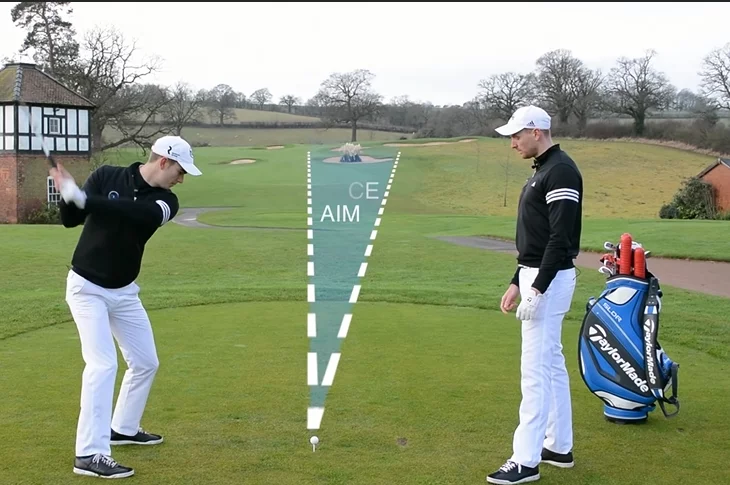
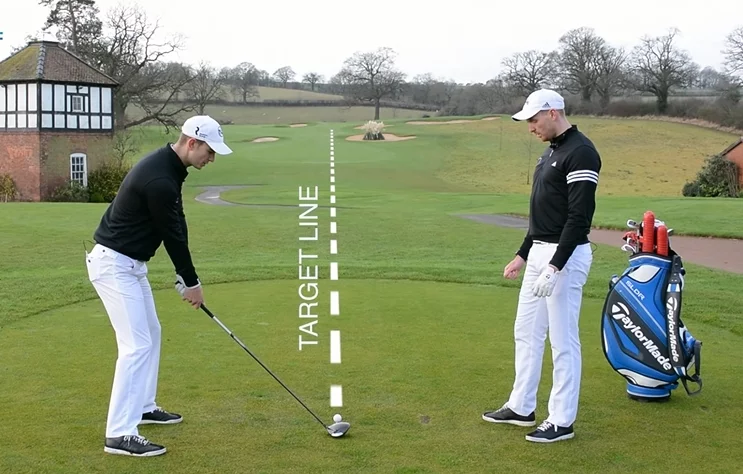
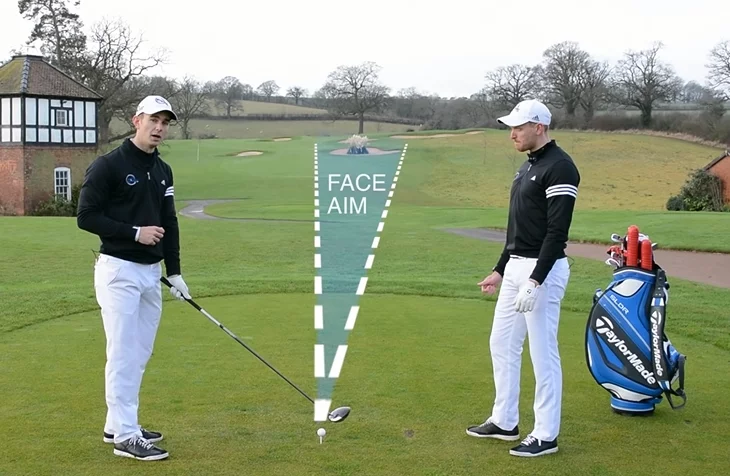
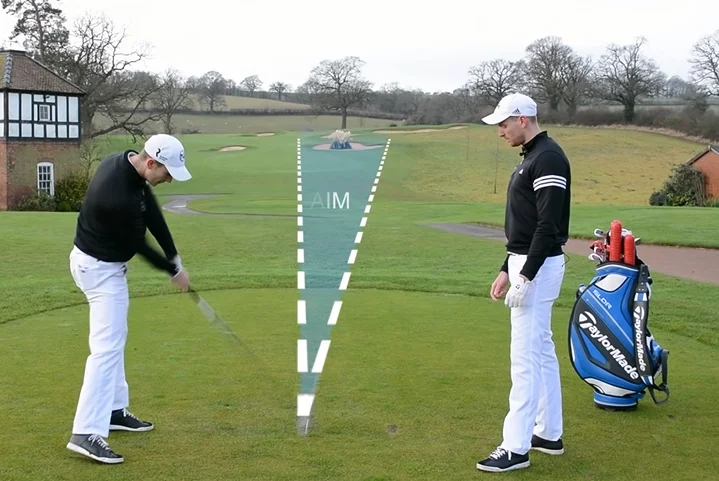
Your grip is the foundation. To promote a draw, rotate both hands slightly clockwise on the club (for right-handers) until you see 2.5 to 3 knuckles on your left hand at address. This stronger grip position encourages the clubface to close through impact without requiring conscious hand manipulation. Your stance should be aimed slightly right of target with the clubface pointing at the target — this creates the path-face differential that produces draw spin.
Swing Path and Clubface Relationship
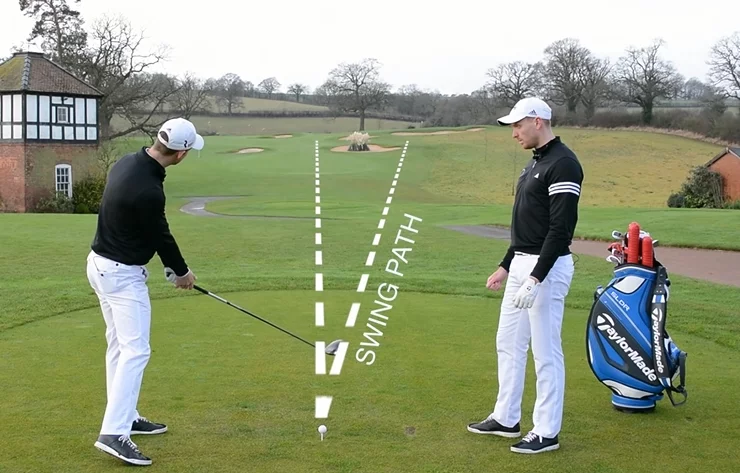
The ball starts roughly where the face points and curves away from the path. For a draw, you need an in-to-out swing path with a clubface that's closed to the path but open to the target line. The typical numbers: a path of +3° (inside-out) with a face angle of +1° produces a clean, controlled draw with about 5 yards of curve. Increase that differential and you get more movement — but also more risk.
| Swing Path | Face Angle (to target) | Result | Typical Curve |
|---|---|---|---|
| +2° in-to-out | +1° open | Gentle draw | 3–5 yards |
| +4° in-to-out | +1° open | Standard draw | 8–12 yards |
| +6° in-to-out | +1° open | Strong draw | 15–20 yards |
| +6° in-to-out | -1° closed | Hook (over-draw) | 25+ yards |
| -3° out-to-in | +2° open | Fade/Slice | 10–20 yards right |
Quick Drills to Start Drawing the Ball
These two drills require nothing more than your normal range session and an alignment stick. Commit to them for two weeks and you'll see measurable path changes on a launch monitor.
The Alignment Stick Drill
Place an alignment stick on the ground pointed 10–15 feet right of your target. Set your feet, hips, and shoulders parallel to this stick. Now aim your clubface at the actual target. Swing along your body line. The ball will start right and draw back. This drill ingrains the feel of an in-to-out path without requiring you to think about twenty swing positions at once.
The Headcover Gate Drill
Place a headcover just outside your ball, about two inches toward the target line. If your swing is out-to-in (slice path), you'll hit the headcover on the downswing. This forces your hands to drop inside and swing outward through impact. Start with half swings and gradually build to full speed.
Common Mistakes That Kill Your Draw
Over-Rotating the Hands
The most common error when learning how to hit a draw in golf is flipping the hands aggressively through impact. This produces hooks, not draws. A proper draw comes from path and setup — not from a last-second hand roll. If you're seeing big right-to-left curves that dive into trouble, your hands are doing too much work. Quiet them down and trust your alignment.
Misaligned Body and Target
Many golfers aim their body at the target and then try to swing inside-out. This creates a fight between your alignment and your intention. Your body naturally swings along the line of your shoulders. If your shoulders point at the target, swinging in-to-out requires a manipulation that's impossible to repeat under pressure. Align right, face at target — let geometry do the work.
Warning: If your draw suddenly becomes a hook mid-round, don't change your swing. Check your grip pressure first — tension creeps in under pressure and causes the face to snap closed. Lighten your hold to a 4 out of 10.
How the Pros Shape Their Draws
The Power Draw Off the Tee
Watch Rory McIlroy's driver swing in slow motion. His path is consistently 2–4° in-to-out with a face that's fractionally closed to the path. The result is a towering draw that carries 290+ yards and rolls another 30. He doesn't manipulate — his setup and backswing position guarantee the path. This is the gold standard for amateurs to study because his mechanics are athletic and repeatable rather than idiosyncratic.
Controlled Iron Draws Into Pins
On approach shots, pros use a much subtler draw — typically 2–5 yards of movement. This allows them to attack left-side pins that a fade can't reach without bringing the bunker into play. The key difference from their driver draw is ball position: it moves back slightly in the stance, which naturally de-lofts the club and promotes a lower, running draw that checks after one bounce. If you're working on your approach game, understanding when to choose a draw over a fade gives you a strategic edge on every approach.
Draw vs. Fade: When Each Shot Wins
Neither shot shape is universally superior. Your stock shot should match your natural tendencies, but understanding both gives you options. Here's how they compare in practical situations:
- Distance: The draw wins by 5–15 yards on average due to lower spin and more roll.
- Accuracy: The fade is generally more controllable because the higher spin creates a softer landing.
- Wind play: A draw handles headwinds better; a fade handles crosswinds from the left more effectively.
- Course design: Most courses have more dogleg-rights than dogleg-lefts, which historically favored faders — but a draw player who can also hit a straight ball has no disadvantage.
The best players on tour carry both shots. If you can only hit one, pick the shape that misses into less trouble on the courses you play most. For many public courses — like the top tracks in Virginia with their tree-lined fairways — a controlled draw that stays in the short grass is worth more than a powerful fade that flirts with boundaries.
Frequently Asked Questions
What is the difference between a draw and a hook?
A draw curves 5–15 yards from right to left (for right-handers) in a controlled manner. A hook curves 25+ yards and is typically unintentional, caused by a clubface that's excessively closed to the swing path. The intent and degree of curve distinguish the two shots.
Can you hit a draw with every club in the bag?
Yes, you can hit a draw with any club from driver to wedge. However, the amount of curve decreases as loft increases because higher-lofted clubs produce more backspin, which overrides sidespin. Your driver will draw the most; your lob wedge will barely curve at all.
Is a draw better than a fade for distance?
Generally yes. A draw produces lower spin and a more penetrating launch, resulting in 5–15 additional yards compared to a fade hit with the same swing speed. The extra distance comes primarily from increased roll after landing rather than additional carry.
How long does it take to learn a draw?
Most golfers with a fundamentally sound swing can produce a draw within 2–4 weeks of focused practice. If you're converting from a slice, expect 4–8 weeks to make the draw your reliable stock shot. Consistent range work with alignment drills accelerates the process significantly.
Should beginners try to hit a draw?
Beginners should first develop solid contact and a repeatable swing before attempting to shape shots. Once you can hit the ball consistently on the center of the clubface, learning a draw is a natural next step that eliminates the common slice pattern.
Does grip strength affect draw spin?
Absolutely. A stronger grip (hands rotated clockwise for right-handers) promotes a closed clubface at impact, which is essential for draw spin. Moving from a weak to a neutral-strong grip is often the single fastest fix for players struggling to draw the ball.
Why does my draw sometimes turn into a hook?
A draw becomes a hook when the clubface closes too much relative to the path. Common causes include excessive grip pressure, over-active hands through impact, or a ball position that's too far back in the stance. Check these three variables first when your draw starts over-curving.
Final Thoughts
Learning how to hit a draw in golf gives you a repeatable, distance-boosting shot shape that works on every course you'll ever play. Head to the range this week with one alignment stick, set up with your body aimed right and your face at the target, and hit 50 balls without worrying about where they end up — just feel the path. Once that in-to-out sensation clicks, you'll never go back to fighting a slice, and every dogleg-left will feel like it was designed for your game.



About Bill Winters
Those who have not yet tried the sport just can’t imagine what is driving these golfers to brave the sun’s heat and go around a course bigger than several football fields combined. It seems like an awful lot of work considering that the ball is quite small that is must be hard to hit, the ground of the course is not flat and, most annoying of all, there are sand traps lying around seemingly bent on preventing a player from finishing the course.
Follow & Subscribe for more:


About the Author

The game of golf may seem like an awful lot to take on when one considers that the ball is quite small, must be hard to hit and carry through windy conditions with little chance for error. The ground course has hillsides which make it challenging enough without adding sand traps who seem bent on preventing players from completing their round!
Get the FREE Gifts now. Or receive the latest golf eBooks for free from our bestselling.
Disable Ad Block to reveal all the secrets. Once done, hit a below button: