Last summer, I was sitting in the clubhouse after a round when my playing partner picked up a ball and asked, "Have you ever actually counted these things?" I hadn't — but the question stuck with me. If you've ever wondered how many dimples golf ball manufacturers put on that little sphere you tee up every weekend, the answer is more interesting than you'd expect. Most golf balls have between 300 and 500 dimples, with 332 being one of the most common counts. Those tiny indentations aren't just cosmetic — they're the reason your ball flies far and straight instead of flopping off the tee like a knuckleball. Whether you're shopping for new golf equipment or just curious about the science behind your gear, understanding dimples gives you a real edge.

Every major ball manufacturer — Titleist, Callaway, Bridgestone, TaylorMade — uses a different dimple count and pattern. There's no single "correct" number. The design depends on what the engineer is optimizing for: distance, spin control, or a balance of both. A Titleist Pro V1 has 388 dimples arranged in a tetrahedral pattern, while a Callaway Chrome Soft uses 332 in a hex pattern. These differences matter more than most golfers realize.
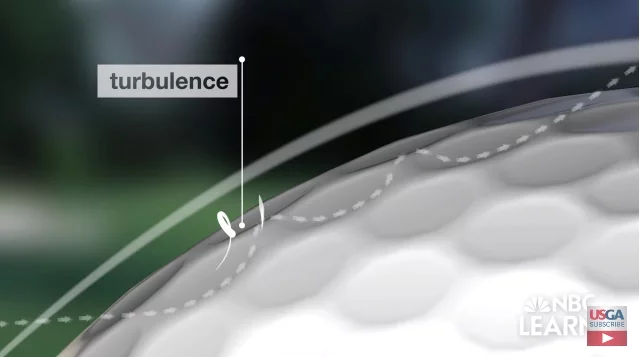
The science is straightforward. Dimples create a thin layer of turbulent air around the ball, which reduces drag and increases lift. A smooth ball hit under the same conditions would travel roughly half the distance. That's not a guess — it's been tested in wind tunnels by aerodynamics researchers at institutions like NASA and major universities. So those tiny cups on your ball are doing serious work every time you swing.
Contents
How Dimples Make Your Golf Ball Fly
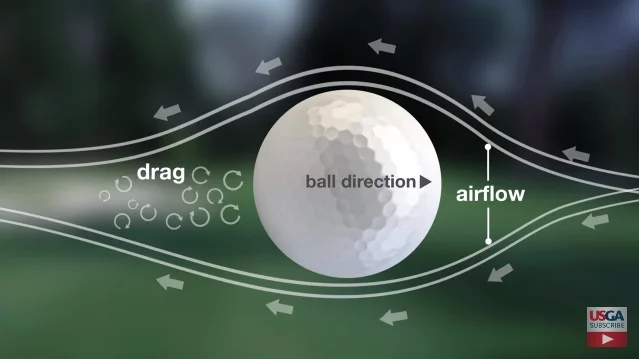
You don't need an engineering degree to understand what dimples do. Think of it this way: when your ball moves through the air, it has to push air molecules out of the way. Dimples help the air cling to the ball's surface longer before separating, which shrinks the low-pressure wake behind the ball. Smaller wake means less drag. Less drag means more distance.
The Aerodynamics Behind Each Dimple
Each dimple acts as a tiny turbulence generator. Here's what happens in the fraction of a second after impact:
- The ball launches off the clubface with backspin (typically 2,000–3,500 RPM for a driver)
- Dimples trip the boundary layer of air from smooth (laminar) flow to turbulent flow
- Turbulent air hugs the ball's surface longer, delaying separation
- The backspin creates higher air pressure below and lower pressure above — generating lift
Without dimples, a well-struck drive that normally flies 260 yards would barely reach 130. That's the difference these little indentations make. The depth, diameter, and shape of each dimple all factor into the final performance. Most dimples are between 0.010 and 0.015 inches deep — shallow enough that you barely feel them, but deep enough to reshape airflow completely.
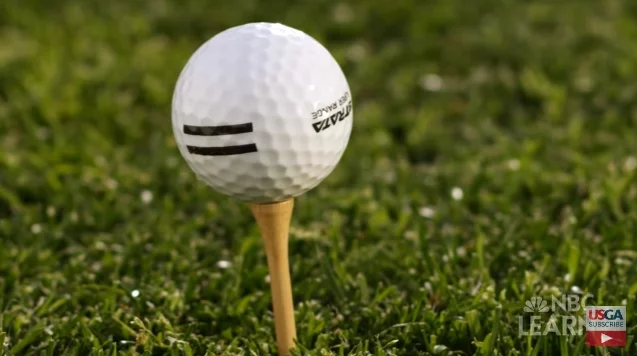
Drag Reduction and Lift Generation
Drag and lift are the two forces that determine your ball flight after launch angle and speed are set. Dimples cut aerodynamic drag by up to 50% compared to a smooth sphere. They also generate lift force roughly equal to the ball's own weight during peak flight.
This is why your ball flight stays straight and carries so far. The combination of reduced drag and increased lift is what gives a golf ball that long, towering trajectory you see on tour broadcasts. If you're working on your swing mechanics, know that dimple design amplifies every improvement you make in your technique.
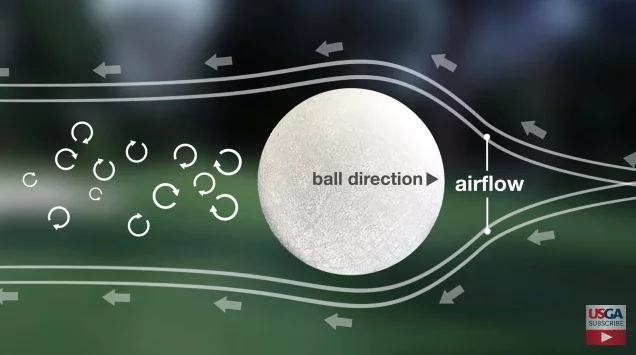
The dimple pattern on your golf ball affects distance and spin more than most swing changes you'll make in a season. Pick the right ball before you overhaul your technique.
Dimple Counts Across Popular Golf Balls
Not all golf balls are created equal, and the dimple count is one of the clearest differences between models. Here's a look at how many dimples golf ball manufacturers use in their most popular models.
Brand-by-Brand Comparison
| Golf Ball | Dimple Count | Pattern Type | Best For |
|---|---|---|---|
| Titleist Pro V1 | 388 | Tetrahedral | Tour-level spin control |
| Titleist Pro V1x | 348 | Tetrahedral | Higher flight, more spin |
| Callaway Chrome Soft | 332 | Hex Aerodynamics | Soft feel, all-around |
| TaylorMade TP5 | 322 | Tri-Fast Core | Five-layer distance |
| Bridgestone Tour B X | 330 | Dual Dimple | Firm feel, low driver spin |
| Srixon Z-Star | 338 | Speed Dimple | Greenside spin |
| Vice Pro Plus | 336 | Large/small mix | Budget tour performance |
| Kirkland Signature | 360 | Icosahedral | Value three-piece |
Notice the range — 322 to 388 among popular models alone. More dimples doesn't automatically mean more distance. It's the combination of count, depth, diameter, and pattern symmetry that determines performance. Titleist uses more dimples in a tighter pattern to fine-tune spin, while TaylorMade uses fewer but optimizes the core layers instead.
Common Dimple Patterns
Manufacturers arrange dimples in geometric patterns to ensure consistent flight regardless of how the ball sits on the tee. The main patterns you'll see are:
- Icosahedral — based on a 20-sided shape; produces even coverage and symmetrical flight
- Octahedral — eight triangular sections; slightly different spin characteristics
- Tetrahedral — four triangular faces as the base geometry; Titleist's preferred approach
- Hex (honeycomb) — hexagonal tiling; Callaway's signature layout for tighter dimple packing
The pattern affects how consistently the ball flies. A poorly arranged pattern creates a "preferred axis" where the ball flies better in one orientation than another. Modern designs eliminate this problem, but it's worth knowing if you're playing older or off-brand balls. When you're building your bag with the right number of clubs, pair that with a ball that complements your equipment choices.
Picking the Right Ball for Your Game
Knowing how many dimples are on a golf ball is useful, but the real question is: which ball should you play? The answer depends on your swing speed, typical course conditions, and what part of your game needs the most help.
Match Your Swing Speed
Your driver swing speed determines how well you compress the ball at impact, which directly interacts with the dimple design:
- Under 85 mph — choose a low-compression ball (like Callaway Supersoft, 332 dimples). These launch higher and compensate for slower speeds.
- 85–100 mph — mid-compression balls work best. The Chrome Soft or Srixon Q-Star give you a good blend of distance and control.
- Over 100 mph — you generate enough speed to benefit from tour-level balls like the Pro V1 or TP5, where dimple pattern precision pays off in spin control around the greens.
If you're a senior golfer adjusting your game, a low-compression ball with optimized dimple aerodynamics can add meaningful carry distance without changing anything in your swing. Similarly, beginners building their first set should focus on a forgiving ball that maximizes distance over spin.
Consider Your Course Conditions
Wind and altitude change how dimples perform. In windy conditions, a ball with a lower trajectory profile (often achieved through shallower dimples and lower spin) keeps you out of trouble. At high altitude — think courses in Colorado or Mexico — the thinner air means less drag on any ball, so dimple design matters slightly less for distance but more for controlling spin.
Playing a links-style course where you need to keep the ball low? A ball engineered for penetrating flight with a tighter dimple pattern will outperform a high-launch model. Whether you're teeing it up at a great public course in Dallas or your local muni, matching the ball to conditions is a quick win most amateurs overlook.
Gear and Methods to Test Ball Performance
You don't have to take a manufacturer's word for it. There are practical ways to see how different dimple designs perform for your specific game.
Launch Monitors and Tracking Tools
A launch monitor is the single best tool for comparing golf balls objectively. Devices like Trackman, FlightScope, or even affordable options like the Garmin Approach R10 give you hard data on:
- Ball speed and launch angle
- Spin rate (backspin and sidespin)
- Carry distance and total distance
- Apex height (peak trajectory)
Hit ten shots with one ball model, then ten with another, using the same club. Compare the averages, not individual shots. You'll often find that one dimple pattern produces a tighter dispersion for your swing, even if the distance numbers are close. Pair this testing with properly fitted club shafts to get the full picture of your equipment performance.
Simple On-Course Testing
No launch monitor? No problem. You can still test effectively on the course:
- Buy a sleeve of two different ball models you want to compare
- Play alternating holes with each ball over several rounds
- Track fairways hit, greens in regulation, and putts per round for each ball
- Pay attention to how each ball feels on approach shots and chips — this is where dimple design shows up in spin and stopping power
After three or four rounds, patterns emerge. One ball will consistently give you better results in the areas that matter most to your handicap. That's the ball you should commit to for the season. Consistency beats constantly switching — your short game touch develops around how a specific ball reacts on the green.
Frequently Asked Questions
How many dimples are on a standard golf ball?
Most golf balls have between 300 and 500 dimples, with 332 being one of the most common counts. There is no industry standard — each manufacturer chooses a count based on their aerodynamic research and performance goals.
Do more dimples mean a golf ball goes farther?
Not necessarily. Distance depends on the combination of dimple count, depth, diameter, pattern, and ball construction. A ball with 322 dimples can outperform one with 392 if the overall design is better optimized for your swing speed.
Why do golf balls have dimples instead of a smooth surface?
Dimples reduce aerodynamic drag by up to 50% and generate lift through backspin interaction. A smooth golf ball hit under the same conditions would travel roughly half the distance of a dimpled one.
Can you feel the difference between dimple patterns?
You won't feel the dimples themselves during a swing, but you'll notice performance differences — especially around the greens. Different dimple designs produce different spin rates on wedge shots and chips, which affects how the ball checks and rolls.
Does dimple depth matter?
Yes. Deeper dimples generally create more turbulence and higher spin, while shallower dimples reduce drag for a more penetrating flight. Most dimples are between 0.010 and 0.015 inches deep.
Are there rules about how many dimples a golf ball can have?
The USGA and R&A regulate golf ball size, weight, velocity, and symmetry, but they do not specify a required dimple count. Manufacturers are free to use any number as long as the ball meets overall performance standards.
Do scuffed or damaged dimples affect performance?
Yes. A scuff that flattens or distorts even a few dimples disrupts the aerodynamic symmetry of the ball. This can cause erratic flight, reduced distance, and inconsistent spin. Replace balls with visible damage to the dimple surface.
Which golf ball has the most dimples?
Some experimental and specialty balls have exceeded 500 dimples, but among mainstream models, the Titleist Pro V1 at 388 sits near the top. The highest counts aren't always the best performers — optimization of the entire dimple pattern matters more than raw count.
Every golf ball tells the same story in 300 to 500 tiny chapters — dimples are the engineering that turns a rubber sphere into a precision instrument, and choosing the right pattern for your game is one of the easiest upgrades you'll ever make.



About Bill Winters
Those who have not yet tried the sport just can’t imagine what is driving these golfers to brave the sun’s heat and go around a course bigger than several football fields combined. It seems like an awful lot of work considering that the ball is quite small that is must be hard to hit, the ground of the course is not flat and, most annoying of all, there are sand traps lying around seemingly bent on preventing a player from finishing the course.
Follow & Subscribe for more:


About the Author

The game of golf may seem like an awful lot to take on when one considers that the ball is quite small, must be hard to hit and carry through windy conditions with little chance for error. The ground course has hillsides which make it challenging enough without adding sand traps who seem bent on preventing players from completing their round!
Get the FREE Gifts now. Or receive the latest golf eBooks for free from our bestselling.
Disable Ad Block to reveal all the secrets. Once done, hit a below button: